Revolutionizing Global Water Security: A Sustainable Breakthrough in Solar-Powered Desalination and Mineral Extraction

The global water crisis has reached a critical juncture, with the United Nations reporting that approximately 2.2 billion people currently lack access to safely managed drinking water. As climate change exacerbates droughts and population growth strains existing reservoirs, nations from the arid reaches of the Middle East to the drought-prone landscapes of California have increasingly turned to desalination—the process of extracting fresh water from the ocean—as a vital lifeline. However, conventional desalination technologies, primarily reverse osmosis and thermal distillation, have long been criticized for their heavy energy demands, chemical dependency, and the discharge of toxic, concentrated brine back into sensitive marine ecosystems.
A significant shift in this technological landscape may be on the horizon. Researchers at the University of Rochester’s Institute of Optics have unveiled a pioneering solar thermal desalination system that promises to produce fresh water without the generation of liquid brine or the need for pre-treatment chemicals. This innovation, recently detailed in the journal Light: Science & Applications, represents a departure from traditional methods by leveraging the power of ultrafast lasers to manipulate the physical properties of metal surfaces, transforming them into highly efficient solar harvesters.
The Technological Foundation: Femtosecond Laser Engineering
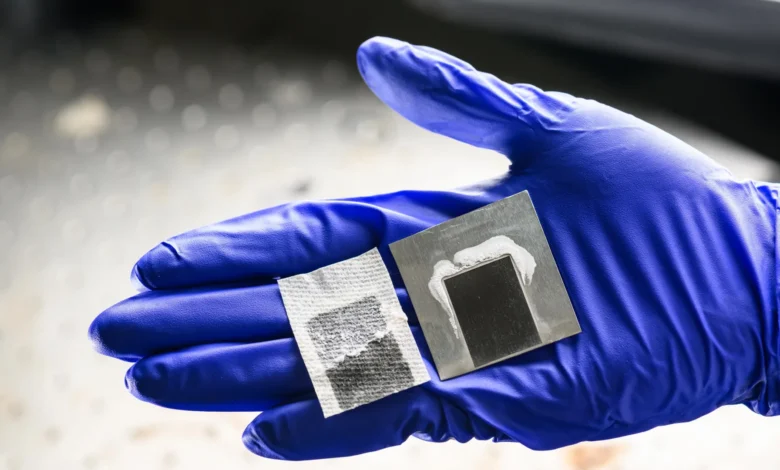
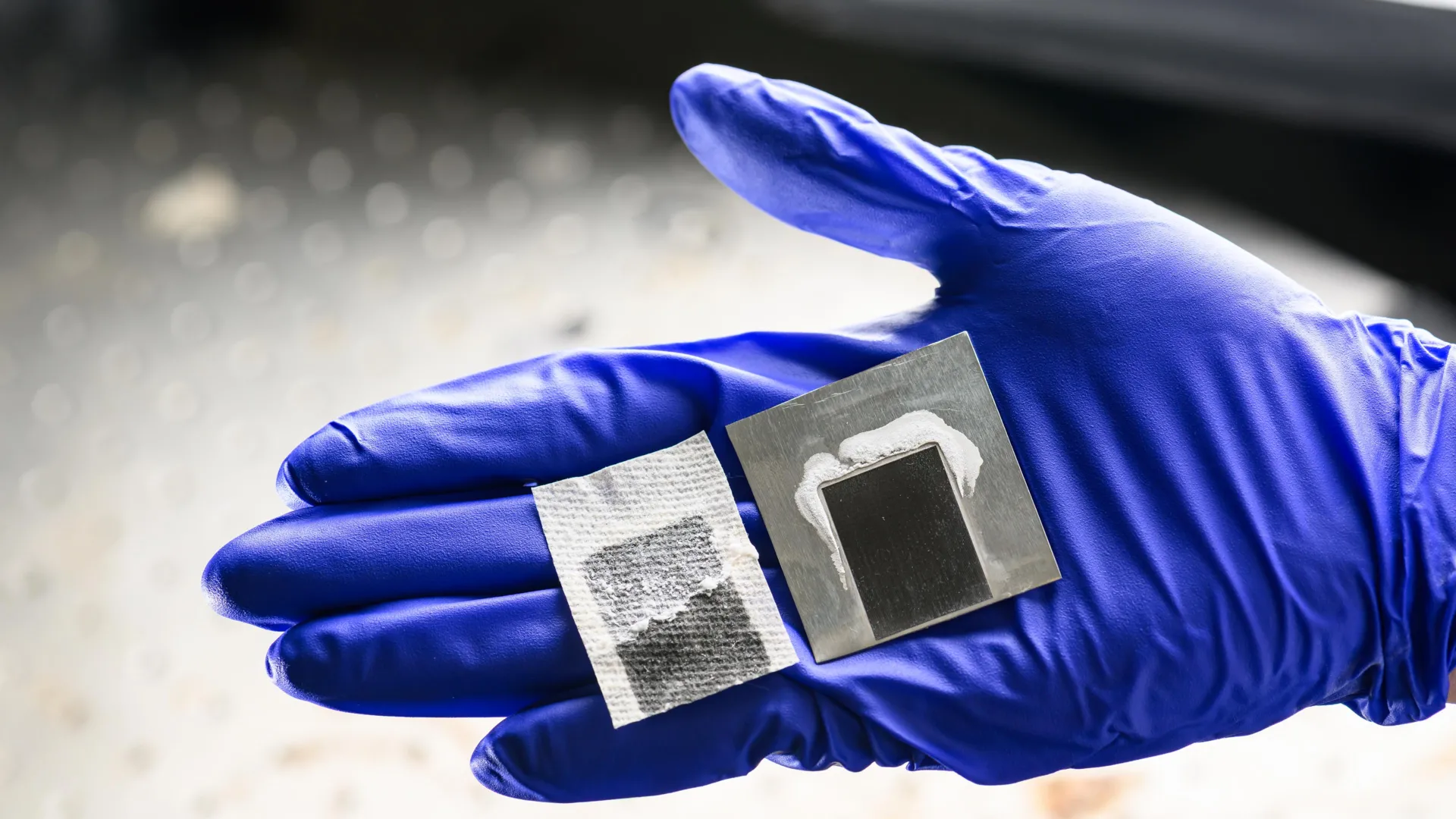
At the center of this breakthrough is the work of Chunlei Guo, a professor of optics and physics and a senior scientist at the University of Rochester’s Laboratory for Laser Energetics. The technology utilizes black metal panels treated with femtosecond lasers—lasers capable of delivering pulses of energy in increments of one quadrillionth of a second. By subjecting the metal to these rapid, high-intensity pulses, the researchers can precisely engineer microscopic surface structures that fundamentally alter the material’s interaction with both light and water.
The resulting surface exhibits two critical properties: extreme solar absorption and "superwicking." The laser-treated metal absorbs nearly the entire spectrum of incoming sunlight, converting it into heat with high efficiency. Simultaneously, the superwicking property ensures that water spreads rapidly and uniformly across the surface rather than forming droplets. This uniform distribution is essential for maximizing evaporation rates, which in turn drives the desalination process.
Solving the Mineral Scale Challenge
One of the most persistent hurdles in solar desalination has been the management of salt accumulation. In traditional solar stills, the evaporation of water leaves behind a crust of salt and minerals that can quickly coat the active surface, effectively "blinding" the device and halting the evaporation process. While laboratory experiments often use simplified artificial seawater—composed primarily of sodium chloride—the reality of natural ocean water is far more complex.
Natural seawater contains a cocktail of magnesium, calcium, and other dissolved solids that, when heated, precipitate into dense, hard mineral deposits. These deposits function similarly to the lime scale that accumulates in household pipes or tea kettles. Unlike simple salt crystals, which can be porous, these complex deposits create an impermeable barrier that reduces thermal efficiency and clogs the system.
To address this, the University of Rochester team incorporated the physics of the "coffee ring effect." Just as a drying spill of coffee leaves a concentrated ring of solids at its periphery, the researchers engineered the panels with specific microscopic grooves that direct mineral deposits away from the central evaporation zone. As water evaporates, the salts are pushed toward the sides of the panel, designated as the "passive region." This self-cleaning mechanism prevents the formation of the stubborn crusts that have historically hampered solar thermal desalination, allowing the system to maintain high performance over extended periods.
Transforming Waste into Economic Assets
The environmental implications of this system extend beyond the production of clean water. Conventional desalination plants generate massive volumes of hypersaline brine, which, when pumped back into the ocean, increases local salinity and depletes dissolved oxygen, creating "dead zones" that devastate marine life. By contrast, the University of Rochester system produces no liquid brine. Instead, it extracts nearly 100 percent of the dissolved solids in a dry, solid form.
This paradigm shift creates an opportunity for a circular economy. The residual solids, which were previously considered an expensive waste disposal problem, can now be treated as a raw material source. Among the minerals present in seawater is lithium, a critical component in the production of high-capacity batteries for electric vehicles, smartphones, and grid-scale energy storage.
In a supplementary study published in the Journal of Materials Chemistry A, Guo and his colleagues demonstrated that the superwicking panels could be further modified with hydrogen titanate nanoparticles to selectively isolate lithium from the mineral byproduct. By embedding these particles into the grooves of the metal panels, the system can effectively "mine" lithium while simultaneously producing fresh water. In tests using water from the Great Salt Lake, the researchers successfully recovered roughly 50 percent of the available lithium, suggesting that future desalination facilities could serve a dual purpose: securing water supplies and providing a sustainable, domestic source of battery-grade materials.
Chronology of Development and Experimental Validation
The development of this technology follows years of research into light-matter interaction at the University of Rochester. The project has moved through several distinct phases:
- Initial Material Engineering: The team spent years perfecting the femtosecond laser etching process to achieve the necessary surface hydrophilicity and solar absorbance.
- Proof-of-Concept: Early trials focused on the evaporation of artificial salt solutions to establish the fundamental fluid dynamics of the superwicking surface.
- Complex Salinity Testing: Researchers advanced to using genuine seawater samples collected from the Pacific, Atlantic, and Indian Oceans. This phase confirmed that the system could effectively manage the complex mineral composition of real-world saltwater without loss of efficiency.
- Mineral Recovery Integration: The most recent phase involved the successful integration of hydrogen titanate nanoparticles to demonstrate the feasibility of lithium extraction.
This progression highlights a methodical transition from fundamental physical research to applied environmental engineering. The project has received support from a consortium of high-level institutions, including the National Science Foundation, the Bill & Melinda Gates Foundation, and the Worldwide Universities Network, reflecting the high stakes and broad interest in solving the global water crisis.
Implications for Global Infrastructure and Sustainability
While the technology remains in the proof-of-concept stage—having been tested on small-scale prototypes—the underlying design is inherently modular and scalable. The ability to deploy these panels in various configurations, from small, decentralized community-based water units to larger, integrated industrial arrays, presents a promising solution for regions that lack the infrastructure for traditional, high-pressure, energy-intensive desalination.
From an environmental standpoint, the elimination of liquid brine discharge represents a significant step forward in marine conservation. Furthermore, by reducing the energy dependency associated with conventional reverse osmosis, this solar-thermal approach aligns with global goals for carbon neutrality. The potential to extract lithium from seawater could also alleviate the environmental pressure currently exerted by traditional terrestrial mining, which is often water-intensive and ecologically disruptive.
However, the path to commercialization involves significant engineering challenges. Scaling up these femtosecond-laser-treated surfaces to cover large areas requires advancements in manufacturing throughput. Additionally, the long-term durability of the laser-etched structures under harsh, corrosive, and high-UV environmental conditions must be rigorously tested over years, rather than months.
Future Outlook and Research Trajectory
As the global population approaches 10 billion by 2050, the demand for both clean water and sustainable energy storage will only intensify. The work led by Professor Guo provides a compelling blueprint for how physics-based innovation can address dual crises. By viewing seawater not merely as a source of drinking water but as a resource-rich reservoir, the University of Rochester team has proposed a vision of desalination that is regenerative rather than extractive.
The research team, which includes senior scientist Subash Singh and a dedicated group of graduate students and alumni, continues to refine the system’s efficiency. Future efforts will likely focus on optimizing the mineral separation process and exploring the recovery of other valuable elements, such as magnesium and calcium, which have industrial applications in construction and chemical manufacturing.
Ultimately, the successful deployment of this technology could bridge the gap between water-stressed regions and economic viability. If these solar-powered panels can be produced at scale and integrated into local infrastructure, they may provide the necessary flexibility to bring fresh water to isolated communities that were previously beyond the reach of centralized desalination networks. The marriage of advanced laser engineering and sustainable resource management offers a rare intersection of scientific elegance and practical utility, holding the potential to reshape the global water landscape for generations to come.