OLM Revolutionizes Anime Production with Bespoke AI Coloring Tools to Bridge the Efficiency Gap

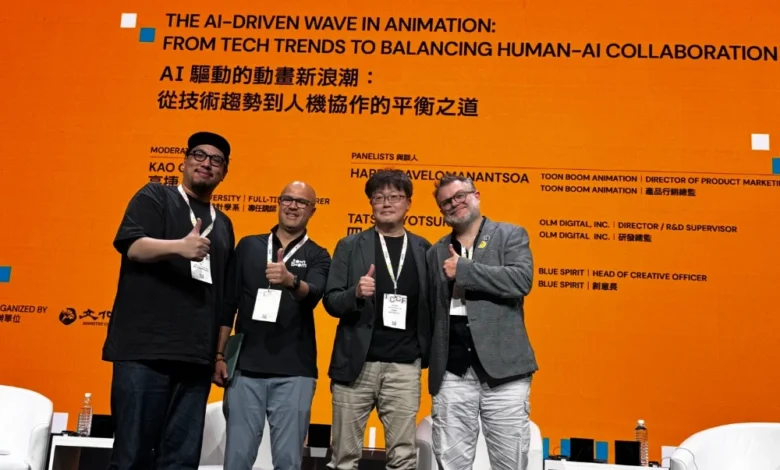
The landscape of Japanese animation is undergoing a significant technical transformation as OLM, the powerhouse studio behind the globally recognized Pokemon franchise, unveils a specialized AI-driven coloring tool designed to streamline one of the industry’s most labor-intensive processes. Announced at the Taiwan Creative Content Fest (TCCF) in Taipei, this development marks a pivotal shift in how traditional animation houses are integrating artificial intelligence into their long-standing production pipelines. Unlike broad-spectrum generative AI models that rely on massive, scraped datasets, OLM’s approach focuses on proprietary, show-specific learning, ensuring that the creative integrity of an animation remains firmly in the hands of its human artists.
The Genesis of the Project: The ANIMINS Initiative
The technology, developed under the banner of the ANIMINS research project, represents the culmination of a 15-month intensive study. Led by OLM Digital board director Yotsukura Tatsuo, the project operated under the auspices of GENIAC, a generative AI initiative overseen by Japan’s Ministry of Economy, Trade and Industry (METI). The program was established to address the mounting pressures of production timelines and the shortage of skilled labor in the Japanese animation sector.
The project, which concluded in February, was predicated on a fundamental challenge: the animation industry often struggles to assemble the clean, high-quality, and massive datasets required to train standard generative AI models. OLM’s strategy was to invert this requirement. Instead of training a model on millions of external images, the OLM tool learns from the specific style, line weight, and color palette of a single, ongoing production. By painting just three frames by hand, an artist can train the system to recognize the specific aesthetic requirements of a scene. The system then populates the remaining frames in approximately 15 seconds per frame—a process that would traditionally require significantly more manual input.
Technical Workflow and Practical Application
The integration of this tool into existing workflows is a core pillar of OLM’s strategy. OLM, which maintains a workforce of approximately 600 staff members across Japan, Malaysia, Thailand, and the United States, manages a diverse portfolio that includes long-running hits like Beyblade and Hanakappa, as well as the critically acclaimed series The Apothecary Diaries.
In its proof-of-concept phase, the tool has demonstrated a reduction in the painting workload by approximately 30%. While this introduces a new step for “checkers”—the staff responsible for reviewing the quality of every frame—the net result is a more fluid production schedule. Yotsukura emphasizes that this is not “generative AI” in the traditional sense, as the system does not create new content from nothing; rather, it performs a highly efficient, automated coloring task that mimics the artist’s initial direction.
The implications for production are immediate. If a new character, such as a dragon, is introduced in a series, the artist simply colors the character in a few frames, and the system adapts to the new design immediately. This allows studios to maintain consistent artistic quality while accelerating the mechanical aspects of animation production.
Industry Perspectives: Toon Boom and the Global Context
OLM is not alone in its quest to solve the animation bottleneck. Toon Boom Animation, the Canadian developer of industry-standard software Harmony and Storyboard Pro, is also advancing its own AI-powered suite, Ember. According to Harry Ravelomanantsoa, product marketing director at Toon Boom, the studio’s coloring tool is already showing impressive results. In a pilot test at a Manila-based studio, the time required to color a 90-second to two-minute scene was slashed from 15 hours of manual work to just two or three hours.
This parallel development highlights a global trend: the transition from manual, time-consuming labor to human-assisted automation. However, the adoption of these tools is not uniform across the industry. The reception of AI in animation varies significantly between Eastern and Western studios, often dictated by contractual obligations and creative philosophy.
Regulatory Challenges and Creative Philosophy
The role of AI in professional animation is heavily scrutinized by streamers and production financiers. Charles Beirnaert, chief creative officer of the French studio Blue Spirit, which produced the hit Netflix series Blue Eye Samurai, notes that the studio currently operates under strict guidelines. For Netflix projects, the use of AI is largely prohibited, reflecting a broader industry concern regarding intellectual property and the potential for AI to diminish the unique, hand-crafted quality that defines high-end animation.
Netflix’s published production guidelines, updated in August 2025, mandate that partners disclose any intention to use generative AI and obtain written approval for its implementation in final assets. This regulatory environment creates a bifurcated market where studios must balance the lure of increased efficiency against the risk of violating client mandates or compromising brand identity.
Despite these hurdles, the potential for AI to assist in non-creative tasks is substantial. Beirnaert shared an experiment where a team of 20 people spent three months on a traditional pilot, while a single person using AI tools was able to replicate the work—covering modeling, layout, and animation—in just a few days. While the animation quality was inferior to the manual version, the backgrounds generated by the AI were superior. This suggests a future where AI handles the technical heavy lifting, allowing artists to focus their energy on high-level character performance and narrative beats.
The Future: Beyond Coloring
Looking ahead, OLM is exploring the use of AI in “in-betweening,” the process of creating the frames between key poses. However, Yotsukura suggests that the most significant gains may lie in organizational efficiency. For a series that has run for a decade or more, OLM is researching AI agents capable of acting as an institutional memory—recalling a director’s original intentions for a specific cut, assisting new staff with continuity, and streamlining the complex licensing management required for secondary revenue streams.
Yotsukura likens the current state of AI technology to a “gacha” game—a Japanese term for capsule-toy machines where the outcome is unpredictable. AI tools can reliably hit 80% of a target, but the effort required to refine that final 20% to reach 100% perfection is where the real work lies. For professional studios, “good enough” is not the goal; the objective is a 100% adherence to creative direction.
Conclusion: A New Era for Anime
The transition to AI-integrated workflows is being compared to the rise of 3DCG (three-dimensional computer graphics) in the late 1990s and early 2000s. Yotsukura, who initially rejected 3DCG as a viable medium for anime, now views it as an indispensable tool. He predicts that the adoption of AI will be significantly faster than the 20-year transition period seen with 3DCG because the initial quality of the technology is already quite high.
The broader implication is a shift in the studio’s mandate. While the industry previously questioned how many jobs AI could replace, the conversation has moved toward what new visual possibilities AI can unlock. By offloading mechanical tasks to software like OLM’s coloring tool or Toon Boom’s Ember, studios aim to grant their artists more time for creative experimentation.
As the industry moves forward, the consensus among major players like OLM is that the total rejection of AI is no longer a viable strategy in a competitive, globalized market. Instead, the focus is on a symbiotic relationship where technology serves as a second wheel, driving the industry alongside the enduring, irreplaceable creativity of human animators. For OLM, the mission remains clear: the mechanical time belongs to the machine, but the heart of the animation must remain with the artist.
Related posts: