Southport Killer Axel Rudakubana Transferred to High-Security Psychiatric Hospital, Sparking Outrage from Victims’ Families and Prison Officers

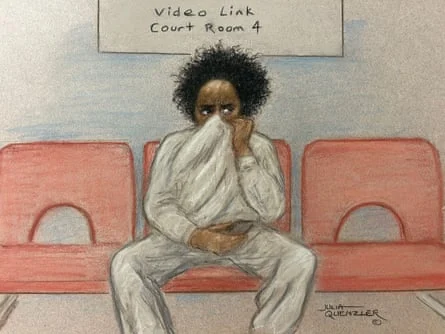
The convicted Southport killer, Axel Rudakubana, has been transferred from the Category A prison Belmarsh to the high-security psychiatric hospital Broadmoor, a move that has been vehemently condemned by the families of his young victims and the national Prison Officers’ Association, who accuse him of attempting to "manipulate the system." The revelation, first reported by The Guardian on Thursday, July 23, 2026, comes just days before the second anniversary of the horrific attack that claimed the lives of three children and injured multiple others.
Rudakubana, now 19, was handed a life sentence in January 2025, with a stringent minimum term of 52 years, for the premeditated murders of seven-year-old Elsie Dot Stancombe, six-year-old Bebe King, and nine-year-old Alice da Silva Aguiar. The decision to transfer him to Broadmoor, one of England’s most secure psychiatric facilities, was reportedly made after it was concluded that he could not be safely managed within the conventional prison system. Despite the transfer, authorities have affirmed that the killer’s 52-year minimum sentence remains unchanged, a crucial point for the families seeking justice.
Victims’ Families Voice Profound Distress and Accusations of Manipulation
The news has reopened deep wounds for the bereaved families, who are struggling to comprehend the decision, particularly as the two-year mark since the tragedy approaches on Wednesday, July 29, 2026. Chris Walker, a representative from the law firm Bond Turner, who acts on behalf of the three families, conveyed their anguish. "The three families we represent have been made aware of this development in the last 48 hours, and it is safe to say that whilst this news would devastate them at any time, the fact that this has occurred as we approach the second anniversary, in our view, is another move by AR who would appear to be attempting, once again, to manipulate the system," Walker stated. He emphasized the lack of detailed information provided to the families, indicating they had received "the barest of details." Bond Turner is urgently seeking a meeting with relevant authorities to gain a comprehensive understanding of the situation before offering further comment. The emotional toll on the families is immense, as they grapple with the perception that their children’s killer might be receiving a more lenient environment, despite assurances of continued detention.
The Horrific Southport Attack: A Community Scarred
The incident that led to Rudakubana’s conviction was a meticulously planned and brutal attack that shocked the nation. On July 29, 2024, Rudakubana unleashed terror at a Taylor Swift-themed dance class in Southport. Armed and dangerous, he targeted innocent children and adults, transforming a joyful event into a scene of unimaginable horror. Elsie Dot Stancombe, Bebe King, and Alice da Silva Aguiar lost their lives, their promising futures brutally cut short. The attack also left eight other children injured, alongside the class instructor, Leanne Lucas, and a brave businessman, John Hayes, who heroically attempted to disarm the assailant. The community of Southport was left reeling, forever marked by the senseless violence perpetrated by a then-teenager. The depth of the trauma extended far beyond those directly involved, affecting emergency responders, local residents, and the wider public who followed the harrowing details of the case. The trial brought some closure, but the pain of loss remains a constant presence for the victims’ families.

Rudakubana’s Troubled Trajectory: Missed Warnings and Escalating Concerns
Axel Rudakubana’s path to the Southport massacre was preceded by a disturbing history of concerning behaviours and interactions with mental health and counter-extremism services. Hailing from Banks, Lancashire, his troubled past was extensively detailed during his trial. Alder Hey children’s NHS foundation trust confirmed that Rudakubana had been under its care as a mental health patient between 2019 and 2023. This period saw him referred to the trust after an alarming incident where he brought a knife to school, later admitting his intent "to use it." Despite these interventions, his engagement with the services reportedly ceased in 2023, raising questions about the continuity and effectiveness of care.
Furthermore, Rudakubana was referred to the UK’s counter-extremism programme, Prevent, on multiple occasions. One referral stemmed from his research into school massacres on a computer at his subsequent school, the Acorns. While there were two other Prevent referrals, none were progressed to higher levels of intervention. Authorities at the time noted that Rudakubana exhibited no clear ideological motivation behind his morbid obsession with violence, making his case particularly complex for intervention strategies primarily designed to counter radicalization. This history paints a picture of a young individual with escalating violent tendencies and significant mental health needs, whose trajectory ultimately led to unimaginable tragedy despite various touchpoints with support systems. The question of whether more could have been done to prevent the attack remains a painful point of reflection for many.
Prison Officers’ Association Expresses Grave Concerns
The decision to transfer Rudakubana has also drawn sharp criticism from the Prison Officers’ Association (POA), echoing the families’ sentiments regarding system manipulation. Mark Fairhurst, chair of the POA, issued a scathing statement, asserting that Rudakubana had "played the system." Fairhurst articulated profound concerns about the implications of the transfer, not only for justice but also for the safety of staff. "This vile offender has played the system and will now enjoy the freedoms that are afforded mentally unwell patients in secure psychiatric hospitals, including benefits that law-abiding taxpayers will fund," he stated, highlighting a common public perception that psychiatric hospitals offer a more comfortable environment than prison.
Fairhurst further raised critical safety issues for his members. "My members will be placed at risk without the protections afforded to staff in prisons because he is now classed as a patient. He should spend his entire sentence in a prison in solitary confinement." This statement underscores a significant distinction in the operational frameworks of prisons versus high-security hospitals. Prison staff operate under different legal powers and have different means of control over inmates compared to the therapeutic and rehabilitative approach employed in psychiatric settings, even highly secure ones. The POA’s concerns reflect a broader debate about the balance between punitive justice and mental health treatment for dangerous offenders, and the potential for perceived loopholes in the system.
Broadmoor Hospital: A Facility for the Nation’s Most Dangerous

Broadmoor Hospital, located in Crowthorne, Berkshire, is a name synonymous with the confinement of some of the UK’s most infamous and dangerous individuals. It stands as the oldest of England’s three high-security psychiatric hospitals, alongside Ashworth and Rampton. Its history dates back to 1863, and it has housed notorious figures such as Peter Sutcliffe, the "Yorkshire Ripper," and Ronnie Kray. The facility is designed to provide care and treatment for men suffering from severe mental illness who require conditions of high security due to their dangerous, violent, or criminal propensities.
Despite being a hospital, the security at Broadmoor is exceptionally stringent. Patients remain locked up, with conditions heavily regulated by extensive physical security measures, including locked wards, constant monitoring by highly trained staff, and 24-hour CCTV surveillance. The environment is clinically focused, with patients receiving mandatory therapeutic and rehabilitative programmes tailored to their specific mental health needs. The aim is not just containment but also treatment, to manage their mental illness and reduce the risk they pose. However, the operational philosophy differs fundamentally from a prison. While prisons focus on punishment and deterrence, psychiatric hospitals prioritise treatment within a secure framework.
The legal mechanism for such transfers is primarily governed by the Mental Health Act 1983. Under Section 47 of this Act, a serving prisoner who develops a mental disorder requiring hospital treatment can be transferred from prison to a psychiatric hospital. This transfer requires medical recommendations from two registered medical practitioners, one of whom must be approved under Section 12 of the Act as having special experience in the diagnosis or treatment of mental disorder. The decision is made by the Secretary of State for Justice. Crucially, a transfer to a hospital does not negate the original prison sentence. If an offender is deemed no longer to require treatment in hospital, the Mental Health Act provides for a swift return to prison to complete their original sentence. This means Rudakubana’s 52-year minimum term remains legally binding; he will return to prison if his mental state improves sufficiently.
Broader Implications: Justice, Mental Health, and Public Trust
The transfer of Axel Rudakubana ignites a complex debate at the intersection of justice, mental health, and public confidence in the correctional system. For the victims’ families, the move evokes a sense of betrayal and a perception that the severity of Rudakubana’s crimes is being diminished or that he is escaping the full punitive force of his sentence. This emotional impact is amplified by the proximity of the second anniversary of the attack, a time already fraught with grief and remembrance. The families’ accusation of "manipulation" underscores a profound distrust in a system that they feel prioritises the offender’s welfare over their enduring pain.
From a systemic perspective, the transfer highlights the inherent challenges of managing offenders with severe mental health issues within the prison system. Prisons, by their very design, are primarily institutions of punishment and incapacitation, often ill-equipped to provide the intensive psychiatric care required for individuals like Rudakubana. The decision to transfer is typically not taken lightly and involves extensive medical and security assessments. It reflects a determination that the individual’s mental state is such that they pose an unmanageable risk in a prison environment, or that their condition warrants specialized medical intervention that only a high-security hospital can provide. The cost implications are also significant; high-security psychiatric care is typically more expensive than prison accommodation, a point often raised by critics.
This case forces society to confront the difficult balance between the public’s desire for retribution and the legal and ethical imperative to treat severe mental illness, even in the most heinous criminals. While the law dictates that a person suffering from a mental disorder should receive appropriate medical treatment, public sentiment often struggles with the notion that such treatment might be perceived as a lesser punishment. The ongoing scrutiny of Rudakubana’s case will undoubtedly fuel discussions about the adequacy of mental health provision within the criminal justice system, the transparency of transfer decisions, and the continuous struggle to deliver justice while upholding medical and human rights principles. As the nation reflects on the tragic events of two years ago, the complexities surrounding Axel Rudakubana’s incarceration and treatment continue to challenge perceptions of crime, punishment, and rehabilitation.
Related posts: