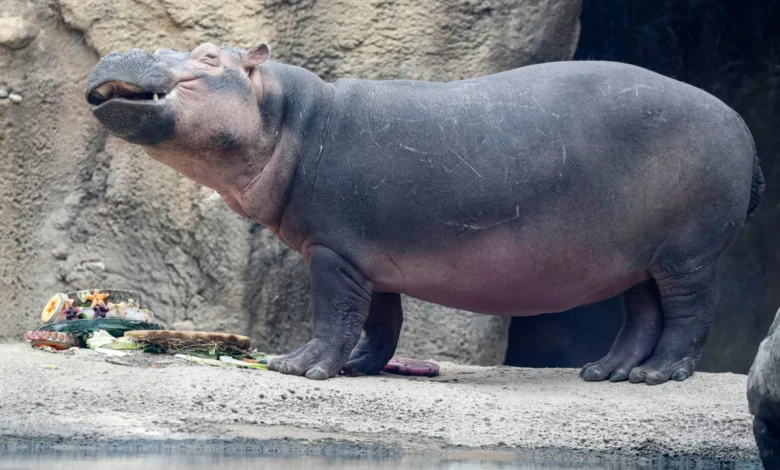
The Cincinnati Zoo and Botanical Garden confirmed on Thursday that Fiona, the Nile hippopotamus who captured the hearts of millions across the globe, has died at the age of nine. Her passing follows a sudden and critical medical emergency triggered by the ingestion of a foreign object, marking a heartbreaking conclusion to the life of an animal that had become a symbol of resilience and scientific triumph. The zoo’s leadership has described the loss as a profound blow to both the institution and the international community that followed her growth from a precarious, premature birth to a thriving adult.
A Critical Medical Emergency
The chain of events leading to Fiona’s death began approximately one week ago when zoo veterinary staff observed that the hippopotamus had ingested a knit hat, which had been inadvertently dropped into her enclosure by a visitor. While the presence of foreign objects in animal enclosures is a persistent challenge for zoos worldwide, the physiological constraints of a hippopotamus make such an occurrence particularly hazardous.
For several days following the incident, the zoo’s animal care team implemented a rigorous 24-hour monitoring protocol. The initial strategy focused on supportive care, as clinicians hoped the item would pass through her digestive tract naturally. In veterinary medicine, particularly regarding megaherbivores like hippos, surgical intervention is considered a last resort due to the extreme risks associated with anesthesia and the sheer physical scale of the animal. As the week progressed, however, Fiona’s clinical condition deteriorated. She exhibited a significant decline in appetite, lethargy, and signs of fluid loss, indicating that the obstruction was causing severe systemic distress. Despite the efforts of the veterinary team to provide intensive medical support, the hippo was unable to overcome the physical blockage, leading to her death on Thursday.
The Life and Legacy of a Miracle Hippo
To understand the depth of the public’s grief, one must look back at the extraordinary circumstances of Fiona’s birth. On January 24, 2017, the Cincinnati Zoo made history when the calf was born six weeks premature to her mother, Bibi. Weighing only 29 pounds—significantly below the typical birth weight for a Nile hippo, which usually ranges between 55 and 110 pounds—Fiona was unable to stand or nurse on her own.
The moniker "Fiona" was bestowed upon her by the staff, who noted the distinctive shape and size of her ears, which bore a striking resemblance to the princess character from the Shrek film franchise. Her survival was far from guaranteed; in the wild, a calf of her size and physical condition would have likely perished. The zoo staff undertook an unprecedented 24-hour intensive care regimen, documenting her progress on social media platforms. This transparency allowed the public to witness the daily struggles and victories of her rehabilitation. She became an international sensation, representing the potential for modern veterinary science to intervene successfully in wildlife conservation. Her journey from a fragile, wobbling calf to a healthy, 2,000-pound adult solidified her status as the zoo’s most famous resident.
Chronology of the Incident and Clinical Response
The timeline of the final week serves as a sobering reminder of the fragility of even the most robust animals under human care:
- Initial Incident: A visitor-dropped item (a knit hat) is identified within the habitat.
- Days 1–3: Veterinary staff monitor Fiona’s behavior, appetite, and stool production. No immediate signs of distress are noted, leading to a "watch and wait" approach to avoid the dangers of surgical intervention.
- Day 4: A marked decline in appetite is recorded. The veterinary team initiates a diagnostic series, including blood panels and ultrasound imaging, to track the position of the obstruction.
- Days 5–6: Fiona displays signs of energy loss and dehydration. Supportive care, including intravenous fluid therapy and nutritional support, is ramped up to stabilize her condition.
- Day 7: Despite the best efforts of the medical team, Fiona’s vital signs fail. The zoo officially announces the end of her life, citing the inability to remove the obstruction.
Institutional and Veterinary Perspectives
The Cincinnati Zoo’s medical team, recognized as a leader in zoo animal husbandry, has expressed deep sorrow while emphasizing the complexity of the medical emergency. In a formal statement, the zoo noted, "It is with extreme sadness that we share with you the devastating news that Fiona did not make it after multiple attempts from our amazing vets and keeper team to help her through what ended up being a medical emergency. We know everyone in the community will be crushed by this news, as we all are."
The zoo has asked for privacy for the animal care staff, many of whom have worked with Fiona since her birth. The psychological impact on keepers who spend years developing deep, communicative bonds with the animals in their care is significant. The institution has also requested that the public respect the space of the staff as they navigate the loss of an animal that was, in many ways, a member of the zoo’s extended family.
Broader Implications for Zoo Safety and Visitor Conduct
The death of Fiona brings renewed focus to the protocols governing visitor interactions with animal habitats. While the Cincinnati Zoo maintains strict safety barriers, the accidental introduction of foreign objects remains an unavoidable risk factor in public exhibits. The incident serves as a grim case study in the importance of visitor compliance with zoo safety guidelines.
Historically, zoos have struggled with the balance between immersive, open-air exhibits and the protection of animals from external debris. The "Harambe incident" in 2016 at the same facility highlighted the volatility of human-animal interactions. Fiona’s death, while accidental rather than the result of a direct confrontation, underscores that even passive items—such as clothing or personal belongings—can result in catastrophic biological consequences for large mammals.
Industry experts point out that for hippos, whose digestive systems are optimized for processing large volumes of dense vegetation, the presence of synthetic, non-biodegradable fibers like those found in a knit hat can lead to fatal impaction. This medical event is a rarity, yet it highlights the need for continued public education regarding the hazards of dropping items into habitats.
Cultural and Economic Impact
Fiona’s influence extended far beyond the walls of the Cincinnati Zoo. As a digital icon, she was the subject of children’s books, specialized merchandise, and countless viral video clips. Her popularity translated into significant economic benefits for the zoo, driving tourism and fostering a robust membership base. Beyond the financial, her role as an ambassador for the Nile hippopotamus species—which is classified as "Vulnerable" by the International Union for Conservation of Nature (IUCN)—was instrumental in educating the public on the threats facing wild populations, including habitat loss and poaching.
The outpouring of condolences from fellow zoological institutions, conservation groups, and the public reflects the unique place Fiona held in the zeitgeist. She was an entry point for many young children to learn about zoology and animal welfare. The loss of such a high-profile ambassador creates a void in the educational programming of the institution, as the zoo must now determine how to commemorate her legacy while managing the ongoing care of the remaining hippopotamus population, including her mother, Bibi.
Conclusion: A Lasting Legacy
As the Cincinnati Zoo processes this loss, the focus remains on the resilience Fiona displayed throughout her life. From her premature birth in 2017 to her final moments, she embodied the spirit of the fight for life. The institution is expected to hold a private memorial for staff, while fans have already begun creating spontaneous tributes outside the zoo gates.
The death of Fiona is not merely the loss of a zoo animal; it is the conclusion of a story that brought millions of people together in hope and celebration of life. While the immediate cause of death—a tragic accident involving a misplaced item—is difficult to reconcile, her legacy as a symbol of scientific achievement and public joy will likely persist. The Cincinnati Zoo, in its long history, has weathered many storms, but the loss of its most famous resident marks the end of a singular, defining era. The lessons learned from her life, and unfortunately, from her death, will undoubtedly inform the future of animal care and visitor safety protocols in zoos across the nation for years to come.