Patrice Vermette Promises Dune Part Three Will Be a Cinematic Spectacle of Unprecedented Scale

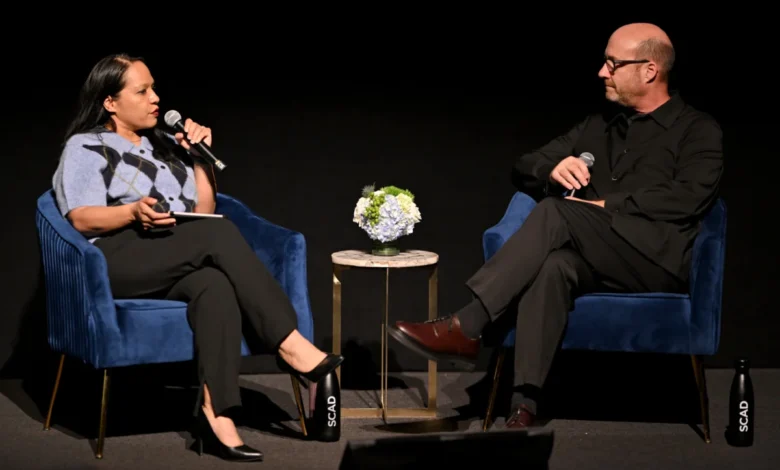
The anticipation surrounding the conclusion of Denis Villeneuve’s sweeping science-fiction epic, Dune: Part Three, has reached a fever pitch following recent comments from the production’s visionary architect. Patrice Vermette, the Academy Award-winning production designer, recently provided a rare glimpse into the logistical and creative hurdles of the final installment. Speaking at the SCAD Savannah Film Festival, where he was honored with Variety’s Creative Impact Award, Vermette teased the film as a grand, pyrotechnic finale to one of the most ambitious trilogies in modern cinema history.
As the production gears up for its December 18, 2026, release, the industry is bracing for a film that promises to push the boundaries of what is possible in large-scale filmmaking. The third chapter, based on Frank Herbert’s seminal novel Dune Messiah, will pick up 17 years after the events of Part Two. This time jump introduces a more mature, perhaps more volatile, Paul Atreides, played once again by Timothée Chalamet, as he grapples with the existential and political consequences of his absolute rule as Emperor of the Known Universe.
The Architect of Arrakis: Vermette’s Creative Evolution
Patrice Vermette’s rise to prominence in the industry is a narrative defined by relentless creative problem-solving. Before he became the primary visual partner for Denis Villeneuve, Vermette cut his teeth in the high-pressure world of music videos. It was here that he discovered his ability to synthesize a director’s internal vision into a tangible physical reality.
The professional bond between Vermette and Villeneuve is rooted in a decade-long history of mutual admiration that finally coalesced during the production of the 2013 psychological thriller Enemy. Since then, the duo has become an inseparable creative unit, working on Arrival, Sicario, and the entirety of the Dune franchise. Their working relationship is governed by a singular, non-negotiable rule: never repeat a set. Even when exploring the same planets or political factions, every environment must be reimagined to reflect the shifting narrative stakes.
Engineering the Impossible: The Logistics of Dune Part Three
Vermette’s design philosophy for the Dune franchise is grounded in a commitment to practical, reality-based construction. He maintains that if an object or structure exists in a fantasy world, it must possess a logic that makes it feel grounded and functional. This dedication to realism was most evident in his recent discussion of the upcoming film’s opening sequence.
Describing the sequence as a “crazy idea,” Vermette detailed the construction of a 55-ton spaceship that was designed to be partially buried underground. The scene requires a complex set of environmental effects, including a persistent rainstorm—a rarity on the arid planet of Arrakis. To execute this, the production team utilized advanced spider rigs and water pump systems to maintain the set’s functionality amidst a massive, high-stakes battle.
This level of detail is not merely for spectacle; it is a testament to the collaborative spirit of the production team. By working closely with cinematographer Greig Fraser, Vermette ensures that lighting and set design operate in tandem, removing the need for digital “cheating” and providing the actors with a fully immersive environment. For the Harkonnen-controlled Giedi Prime, Vermette drew inspiration from industrial septic tanks, creating a visual aesthetic that is simultaneously oppressive and breathtaking.
The Collaborative Ecosystem: Insights from SCAD Savannah
The broader context of Vermette’s work was highlighted at the SCAD Savannah Film Festival’s 10 Artisans to Watch panel. The event underscored a fundamental truth of contemporary high-budget filmmaking: the "auteur" model is increasingly supported by an expansive village of specialists. Kathleen Radomski, Chair of Production Design at SCAD, noted that the industry’s massive global footprint relies on the seamless integration of departments separated by thousands of miles.
The 2024 class of artisans, which included professionals from the fields of sound design, animation, and costume design, provided a look at how collaboration solves complex budgetary and technical constraints. For instance, art director Landon Lott discussed the design of an ice hotel for the film Pluribus, noting that the final look was the result of a collective effort between architects and muralists. Similarly, sound editor Anne Jimkes shared how her work with director Peter Berg on The Mosquito Bowl relied on a delicate balance of sound and silence to anchor the audience’s emotional experience.
Financial and Creative Constraints as Catalysts for Innovation
A recurring theme among this year’s honorees was the transformative power of limitations. Whether it was Jessica Ronane’s meticulous casting process for Elsinore—where she prioritized actors she had observed on stage to ensure emotional authenticity—or Allie Shehorn’s necessity to execute complex makeup effects in only two takes for the film Obsession, the message was clear: budget constraints often serve as the primary catalyst for creative breakthrough.
Vermette’s own experience on the film Backrooms perfectly encapsulates this. When the production ran short on a specific type of carpet, rather than abandoning the vision, the team utilized a second, slightly different rug, turning the aesthetic inconsistency into a deliberate symbolic transition within the film. This ability to adapt to real-world restrictions is what distinguishes high-level artisan craft from mere production logistics.
Looking Ahead: The Legacy of Dune
The implications of the Dune franchise for the future of science fiction are significant. By prioritizing practical effects and a grounded, tactile aesthetic, Villeneuve and Vermette have set a new standard for world-building. As the trilogy approaches its conclusion, the focus has shifted from establishing the mechanics of the universe to exploring the moral decay of power.
The 17-year time jump in Part Three allows for a narrative structure that is less about the "hero’s journey" and more about the tragic consequences of unchecked ambition. Industry analysts suggest that the success of the Dune franchise has shifted the pendulum back toward large-scale, visionary filmmaking that respects the audience’s intelligence and demands a high level of technical craftsmanship.
For emerging filmmakers, the advice provided by the panel is remarkably consistent: "always be making." Whether it is grabbing a group of friends to shoot a short film or mastering the political nuances of set schedules and department budgets, the path to professional excellence is paved with practice.
Conclusion: The Final Act
As December 2026 approaches, the cinematic community awaits the resolution of the Atreides saga with significant expectation. Patrice Vermette’s promise of a "major spectacle" is not merely marketing hyperbole; it is a reflection of a production culture that values the synergy between technology, art, and storytelling.
The Dune trilogy stands as a landmark achievement in modern cinema, proving that even the most complex, massive-scale narratives can be brought to life when directors and artisans operate as a single, cohesive unit. With the final pieces of the puzzle now being set in place, the legacy of this production will likely serve as a blueprint for big-budget filmmaking for years to come. For those tasked with bringing the final chapter to the screen, the mission remains as it has always been: to challenge one another, to refuse the comfort of repetition, and to ensure that every object, every set, and every frame tells a story that is grounded in the reality of the human condition.