Trinh T. Minh-ha Unveils The Undying Desert as a Meditation on Landscape and Colonial Erasure

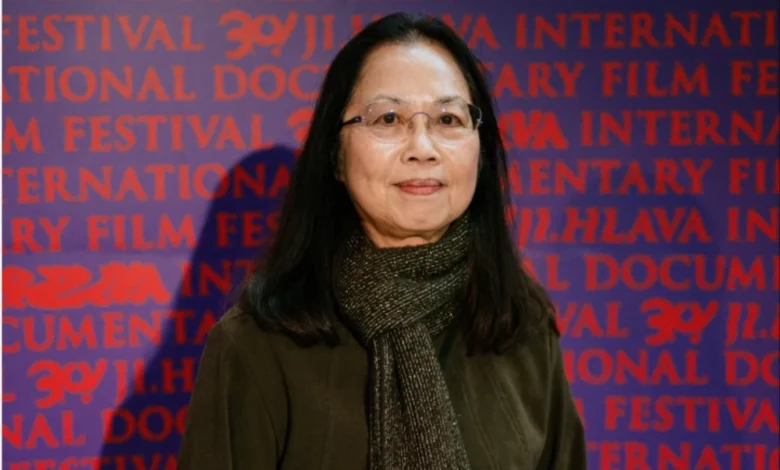
Renowned Vietnamese-American filmmaker, feminist scholar, and post-colonial theorist Trinh T. Minh-ha has confirmed the completion of her latest cinematic work, The Undying Desert. The announcement, made during the Ji.hlava Documentary Film Festival—where the filmmaker is currently the subject of a comprehensive retrospective—marks a significant milestone in a career defined by experimental rigor and the deconstruction of traditional ethnographic filmmaking. For Trinh, whose filmography spans four decades, this project represents a long-awaited homecoming to the geography of the United States, a territory she has navigated through her lens for nearly twenty years.
The Undying Desert is the culmination of two decades of field research and filming within the Great Basin Desert, a vast expanse covering much of Nevada and parts of Utah, California, Idaho, and Oregon. While her previous, globally acclaimed works—such as Reassemblage (1982), Surname Viet Given Name Nam (1989), Forgetting Vietnam (2015), and What About China? (2022)—have frequently interrogated the complex histories of Southeast Asia and the mechanics of the "gaze," this project pivots toward the North American landscape.
A Chronology of Artistic Inquiry
Trinh’s career has been characterized by a refusal to adhere to the rigid categorization of "documentary" versus "fiction." Her pedagogical and artistic journey began in the late 1970s, leading to a body of work that challenges the Western canon of documentary film. The following timeline outlines the evolution of her focus:
- 1982: Release of Reassemblage, which fundamentally altered the landscape of ethnographic film by rejecting the "objective" voiceover common in anthropological documentaries.
- 1989: Surname Viet Given Name Nam, which utilized interviews and performance to examine the politics of identity and memory in the Vietnamese diaspora.
- 2000s–Present: A transition toward long-form, site-specific meditation on land, history, and the intersection of the personal and the collective, culminating in the lengthy production period of The Undying Desert.
- 2024: Completion of The Undying Desert and the staging of a retrospective at the Ji.hlava Documentary Film Festival, highlighting her influence on contemporary experimental nonfiction.
Deconstructing the Arid Myth
Central to Trinh’s inquiry in The Undying Desert is the linguistic and colonial bias inherent in the word "arid." She posits that the classification of desert landscapes as "barren" or "empty" is a construct utilized by colonizing forces to justify the dispossession of land.
"A desert is huge, majestic and beautiful. At the same time, it’s considered ‘arid’ by colonizing forces," Trinh noted during her presentation at Ji.hlava. "All these prejudices about what a desert is still exist in our language. But it’s actually very lively."
This perspective aligns with critical geography and post-colonial studies, which argue that landscapes categorized as "wastelands" are often intentionally overlooked or exploited for resource extraction and military testing—activities that contrast sharply with the lived experiences of Indigenous populations. Trinh’s film seeks to reclaim the narrative, focusing on the relationship between Native American communities and the desert, which she describes as "layers and layers of life."
The Philosophy of the Collective I
In her approach to filmmaking, Trinh avoids the biographical focus on individual protagonists. Instead, she employs what she terms a "collective I," a poetic framework where the filmmaker and the audience are invited into a shared experience. This technique challenges the traditional documentary format that relies on a linear narrative arc and a "hero" figure.
Her methodology is deeply rooted in the belief that the political is not merely a subject matter but an inherent part of the creative process. "Everything we do can be political," Trinh explained. "When you turn the camera toward someone else, you also have to turn it toward yourself." By turning the lens inward, she forces the viewer to grapple with their own presence in the space they are observing.
Future Directions and the New Frontier
Trinh’s engagement with the Great Basin Desert is far from concluded. She has already commenced work on a subsequent project, co-directed with her longtime collaborator, Jean-Paul Bourdieu. This new work is set to examine the paradoxical trend of "space colonization," where isolated groups establish research centers in the desert to simulate life on Mars.
This development adds a layer of irony to her work: while the desert is treated as a spiritual, historical, and living site by Indigenous peoples, it is simultaneously treated as a laboratory for the "colonization of another planet" by modern technocrats. This juxtaposition provides a fertile ground for her continued critique of Western expansionist ideologies.
The Sensory Experience of Cinema
Beyond the thematic content, Trinh emphasizes that cinema is a sensory-totalizing experience. Drawing on her experiences in East Asia, where the lines between artistic disciplines are more fluid, she advocates for a holistic engagement with film. She recounts a viewer’s reaction to her work—"I’m hearing this film with my eyes and seeing it with my ears"—as the ideal reception of her art.
This philosophy is a direct challenge to the modern trend of "content-first" filmmaking, where the priority is often the transmission of information or the reinforcement of a specific political message. Trinh encourages emerging filmmakers to prioritize the integrity of the artistic vision over the "oppressive regulations" of industry standards and expected formats.
Industry Implications and the Future of Documentary
Trinh’s career serves as a case study for the persistence of independent, experimental voices in an increasingly commercialized film industry. Despite her status as a seminal figure in film theory, she acknowledges that the path remains difficult. Her work is not always met with immediate interest from mainstream programmers or producers who seek standardized products.
"I’m still building my audience," she remarked, reflecting on the ongoing struggle to maintain creative autonomy. Her insistence on questioning the "why" behind the demand for classification—asking programmers and critics "Why do you need to know?" if a film is fiction or documentary—remains a cornerstone of her pedagogical influence.
Analysis of Impact
The release of The Undying Desert and the accompanying retrospective at Ji.hlava occur at a time when the documentary field is undergoing a significant reckoning regarding the ethics of the gaze. As the industry moves toward more inclusive narratives, Trinh’s body of work offers a foundational framework for how to engage with "the other" without falling into the trap of voyeurism.
Her focus on the Great Basin Desert as a site of both ancient memory and futuristic, colonial ambition provides a microcosm for broader environmental and sociopolitical concerns. By grounding her film in the lived experiences of Indigenous people while simultaneously critiquing the technological pursuit of extraterrestrial colonization, Trinh is positioned to contribute significantly to the ongoing discourse on the Anthropocene.
Ultimately, the significance of The Undying Desert lies in its refusal to be a static document. By documenting the desert, Trinh is not merely capturing a physical location; she is capturing the shifting relationship between human desire, the natural world, and the persistent, often violent, history of territorial acquisition. As she continues her work, her influence remains a vital, disruptive force for filmmakers looking to move beyond the boundaries of traditional storytelling.
Related posts: