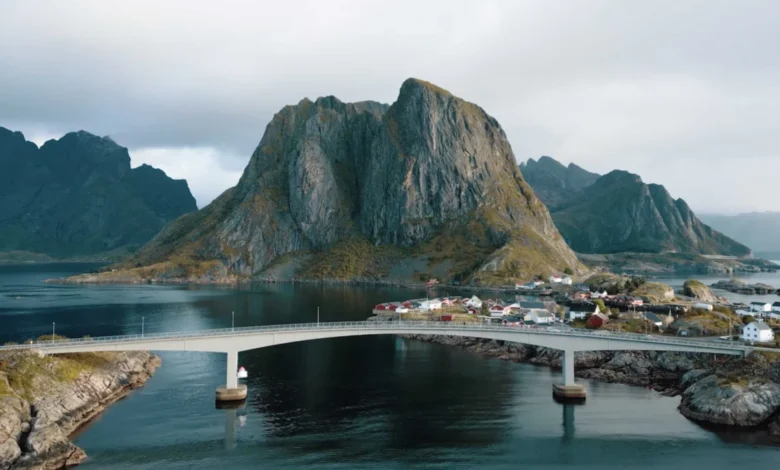
The Arctic air carries a biting chill 2,000 feet above the Norwegian Sea, where jagged mountain faces predating the Jurassic period plunge dramatically into cold, nutrient-rich waters. Here, in the remote southwestern reaches of the Lofoten archipelago, hikers battle sudden windstorms and torrential rains before finding refuge in rocky crevices. Such elemental extremes are the defining characteristics of Northern Norway, a region that draws nearly a million visitors annually to its dramatic glacial hulks, deep fjords, and picturesque fishing villages. Yet, beyond the physical demands of alpine climbing and the search for the Northern Lights, a quieter transformation is taking place across these islands—one driven not by mountaineering, but by a burgeoning agricultural and gastronomic movement centered at Holmen Lofoten.

A Historic Transformation on the Edge of Sørvågen
Located in the wind-whipped village of Sørvågen, Holmen Lofoten represents a delicate balance between historical preservation and contemporary hospitality. Originally established as a commercial cod processing facility, the property features a cluster of mustard-colored cabins on stilts—known locally as rorbuer—equipped with corrugated roofs and traditional grass insulation. Walkways connect these historic structures to modern wooden decks overlooking the Norwegian Sea, maintaining an architectural vernacular that dates back centuries.

The property has been spearheaded by Ingunn Rasmussen, a fisherman’s daughter who returned to her childhood home in October 2001 after years spent abroad. Alongside her son, Håvar Holmen, Rasmussen set out to restore the weathered buildings while adding carefully integrated suites designed to honor the site’s industrial heritage. Rather than imposing modern luxury, the interiors rely on simple, locally sourced furnishings and organic elements that allow the surrounding wilderness to take center stage. This meticulous attention to local heritage forms the foundation for the property’s broader mission: bridging the gap between traveler exploration and environmental stewardship.

The Evolution and Ethos of Kitchen on the Edge
At the core of Holmen Lofoten’s cultural footprint is Kitchen on the Edge of the World, an exclusive culinary event series launched in 2018. Held four times a year, the program invites internationally acclaimed chefs to the Arctic circle to cook alongside local ingredients and engage directly with the surrounding ecosystem. The 30th edition of the event brought together an eclectic mix of international guests—including geologists, adventurers, and culinary tourists—for a four-day immersion in live-fire cooking and zero-waste gastronomy.

This particular installment was helmed by Matt Orlando, a California-born, Copenhagen-based chef renowned for his work at influential kitchens such as The Fat Duck, Per Se, and his former pioneering restaurant, Amass. Orlando’s philosophy centers heavily on circular dining and environmental accountability, making his integration into the Lofoten landscape seamless. Throughout the multi-day program, Orlando collaborated with local producers, sourcing reindeer ribs from sustainable Sámi herds, foraging for wild herbs such as chickweed and sheep sorrel, and utilizing inventive techniques like pressure-cooked fishbone noodles to eliminate kitchen waste.

Other notable culinary figures have anchored the event over its history, including Ana Roš of Slovenia’s Hiša Franko and British farm-to-table pioneer Simon Rogan. According to organizers, the selection criteria for participating chefs prioritizes ecological mindfulness and respect for the local wildlife and communities that sustain the region year-round.

Balancing Tourism Growth with Ecological Preservation
The rise of high-end culinary tourism in Lofoten occurs against a backdrop of shifting economic and environmental pressures. Historically, the local economy relied almost exclusively on the seasonal migration of skrei (Arctic cod) and the production of tørrfisk (wind-dried stockfish) harvested via the iconic tepee-style wooden drying racks known as hjeller that have dotted the archipelago for over a millennium. However, ecosystem shifts, fluctuating fish stocks, and the demands of modern global markets have prompted a diversification of the local economy.

In response, a vibrant agricultural and artisanal movement has taken root across the islands. Organizations like Love Food work to connect small-scale producers—ranging from root vegetable farmers to cheesemakers—with regional restaurants, ensuring that the economic benefits of tourism directly support local stewardship. Furthermore, enterprises like the women-led Lofoten Seaweed Company, co-founded by Angelita Eriksen and Tamara Singer, hand-harvest sugar kelp and nori from strong tidal currents to supply high-end kitchens throughout Europe.

This economic diversification coincides with mounting local concerns regarding overtourism. In recent years, inbound visitor growth in Northern Norway has outpaced the national average, straining local infrastructure and creating friction surrounding wild camping and trail degradation. In response to trail erosion and environmental stress, regional authorities have restricted wild camping to designated grounds, while local guides have increasingly withheld the specific locations of fragile alpine routes.

Industry experts emphasize that promoting sustainable food systems offers a viable framework for mitigating these tensions. By encouraging visitors to engage with the landscape through its agricultural and culinary traditions rather than solely through high-impact mountaineering, destinations like Holmen Lofoten aim to foster a more respectful and enduring relationship between travelers and the natural environment.

The Intersection of Art, Science, and Arctic Hospitality
Beyond the kitchen, the four-day program at Holmen integrated multidisciplinary engagements with the Arctic landscape. Guests participated in botanical tablescapes with British artist Becky Hindley, fashioning traditional wooden spoons from local birch alongside Welsh woodcarver Lee John Phillips, and exploring abandoned historical fishing settlements via Zodiac boats.

These immersive activities highlight a broader psychological shift often experienced in extreme environments—a phenomenon known as attentional elasticity, wherein individuals transition fluidly between observing grand vistas and focusing on microscopic ecological details. This psychological grounding, coupled with communal dining centered around open wood-fired ovens and zero-waste menus, underscores a growing desire among modern travelers for intentional, low-impact tourism.

As global tourism continues to rebound, initiatives like Kitchen on the Edge of the World offer a blueprint for remote communities seeking to harness visitor interest without compromising their ecological integrity. By intertwining the plate with the landscape, Holmen Lofoten demonstrates that true luxury in the Arctic lies not in excess, but in a profound, participatory understanding of the elements that sustain life at the edge of the world.
Related posts: