The Digital Ark: Global Science Community Mobilizes to Protect Climate Data from Political Erasure

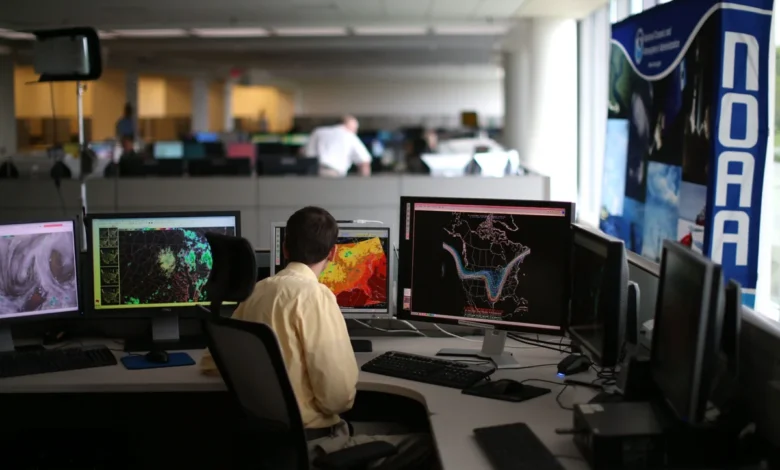
In the heart of Hamburg, Germany, the German Climate Computing Center (DKRZ) is currently undergoing a significant physical expansion. Technicians are installing high-capacity storage racks, not to house new domestic research, but to serve as a digital vault for vital environmental data originating from the United States. This infrastructure project, part of a broader, internationally coordinated effort, aims to preserve climate simulations and empirical datasets that scientists fear could be purged, manipulated, or restricted under the current U.S. administration. As the global scientific community prepares for the United Nations’ seventh major climate assessment, due in 2029, the DKRZ has become a critical node in a nascent, decentralized network of "scientific lifeboats."
The motivation for this initiative stems from a series of aggressive administrative actions in Washington D.C. over the past eighteen months. Since early 2025, federal funding for climate-related research has been drastically curtailed, dozens of government websites have seen references to human-caused global warming removed, and scientific reports have been suppressed or buried. These actions have triggered a profound crisis of confidence among international researchers who rely on the continuity of U.S.-led Earth science.
A Chronology of Institutional Erosion
The current situation is the culmination of a rapid decline in the traditional U.S. role as a steward of global climate data. The timeline of this erosion is marked by several key inflection points:

- January 2025: The United States officially withdraws from the U.N. Intergovernmental Panel on Climate Change (IPCC) and the U.N. Framework Convention on Climate Change, signaling a formal decoupling from international climate governance.
- April 2025: A pivot point in data security occurs when the Department of Government Efficiency, led by Elon Musk, abruptly deletes the massive, multi-decadal archives of NASA’s Socioeconomic Data and Applications Center (SEDAC). This event served as a wake-up call to the global community, prompting an emergency scramble by academic institutions to scrape and mirror public data before it could be permanently lost.
- Summer 2025: The American Geophysical Union (AGU) launches its Data Resilience Project, recognizing that relying on a single, politically volatile source for global climate data is a structural failure.
- Late 2025: The German Research Foundation (DFG) secures a $35 million budget to formalize the "Data Resilience" program, providing the necessary funding to replicate and store U.S. datasets on European servers.
The Vulnerability of Empirical Science
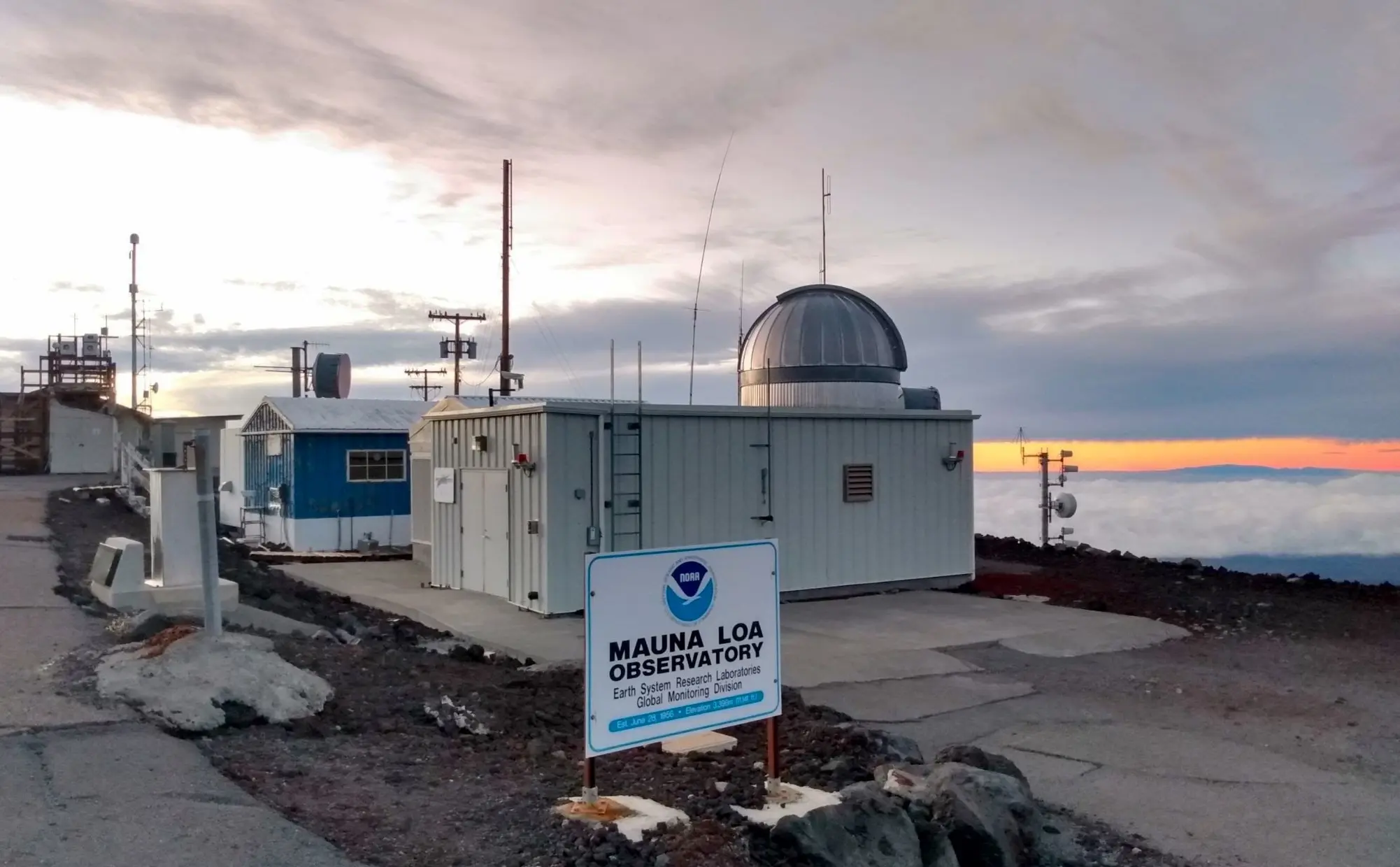
At the center of this controversy is the fragility of digital archives. In an era where "Big Data" defines the pace of scientific discovery, the infrastructure supporting that data is often surprisingly archaic. Much of the world’s most critical climate information—including the iconic Keeling Curve from the Mauna Loa Observatory—resides on localized hard drives or magnetic tapes at specific research universities or government labs.
Until recently, the scientific community operated under the implicit assumption that public records were safe from political interference. However, as the 2025 attempt to defund the Mauna Loa Observatory demonstrated, even the most essential, long-term observational records are now subject to the whims of federal budget cycles.
The logistical challenges of this data migration are substantial. Moving petabytes of information is not a simple task; it requires high-bandwidth fiber optic connections or the physical transport of storage hardware—a process affectionately known as "sneakernet." The cost of these transfers, combined with the complexity of maintaining the software environments necessary to interpret legacy data, has historically discouraged redundant storage. However, the current geopolitical climate has rendered these costs a necessary investment for the preservation of institutional knowledge.
Strategic Responses and Global Collaboration
The response from the scientific establishment has been swift and methodical. The AGU, representing over 60,000 scientists, has pivoted from a research-focused organization to one that actively engages in "data triage." When the U.S. government refused to appoint experts to the IPCC, the AGU formed the U.S. Academic Alliance, nominating 300 independent scientists to ensure the 2029 report remains comprehensive.
In Germany, the strategy is even more concrete. The DKRZ’s "CMIP7-ark" project—named for the seventh Climate Model Intercomparison Project—is specifically designed to mirror U.S. contributions to climate modeling. Similar initiatives, such as SHIELD (Secure Hosting for International Earth-science Linked Data) and SEND (Secure Endangered Earth Data), are currently being populated with datasets pulled from the U.S. public domain.
"We cannot simply accept that important contributions might be lost for technical or political reasons," says Christopher Kadow, head of data analysis at the DKRZ. The sentiment is echoed by researchers like Alex de Sherbinin, who notes that the assumption that U.S. government agencies will act as long-term guardians of public data has proven "tenuous at best."
Broader Implications for Global Research
The implications of this movement extend far beyond the immediate political conflict. The current crisis has forced a fundamental re-evaluation of how scientific data should be managed. Experts in data integrity, such as Jennifer Gibson and Kaitlin Thaney, have long warned that data infrastructure is often invisible until it vanishes. The shift toward decentralized, cross-border hosting suggests that the future of science will be defined by redundancy.
Moreover, the necessity of these measures is not limited to the United States. The ongoing war in Ukraine has already demonstrated the importance of off-site backups; Ukrainian meteorological and biodiversity data have been successfully moved to German servers to prevent their destruction by Russian bombardments. Similarly, the rise of extremist, anti-science political movements in Europe, including the electoral successes of the AfD in Germany, has led many European scientists to recognize that they are not immune to the same pressures their American counterparts are currently facing.
A New Architecture for Science
As researchers look toward the future, the goal is to establish "digital pipelines" that allow for the instantaneous, automated replication of scientific data across multiple international jurisdictions. By removing the dependency on a single national host, the scientific community aims to build a more resilient architecture that can survive political upheaval, natural disasters, and cyber warfare.
Frank Oliver Glöckner, a professor at the University of Bremen and head of the Pangaea repository, argues that the current crisis has inadvertently accelerated a necessary evolution in scientific cooperation. By forcing the hand of researchers, the U.S. administration has pushed the scientific community to move away from "data hoarding" and toward a more transparent, collaborative, and globally distributed model.
"It would be ideal if, in the future, all climate data worldwide were connected via digital pipelines," Kadow added. "That way, in the event of a threat, we could simply flip a switch to secure it elsewhere."
This transition represents more than just a technical fix; it is a profound shift in the social contract of science. The era of assuming that scientific data will remain safe and accessible simply because it is factual is effectively over. In its place, a new, defensive, and highly coordinated global network is emerging, ensuring that the evidence of a changing planet remains available to policymakers, industry, and the public—regardless of the political winds in any single nation. As the DKRZ continues to install its new racks, the message is clear: in a world of increasing instability, the preservation of knowledge has become a high-stakes, international imperative.