Facing a difficult decision: NASA navigates the transition to a post-Dragon era in low-Earth orbit

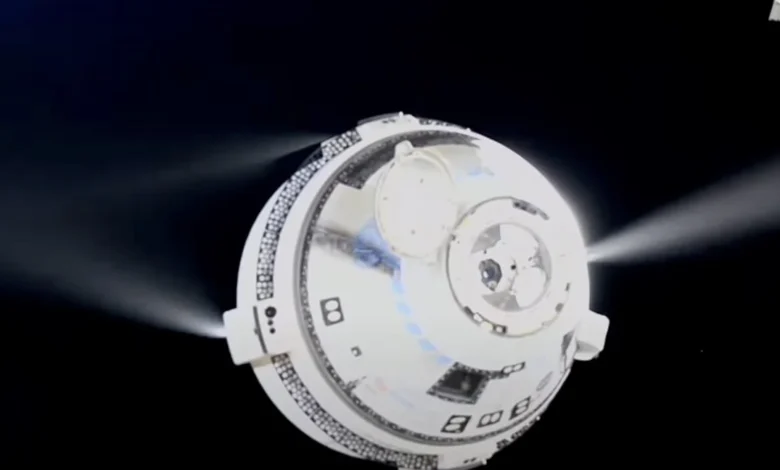
As the horizon for the International Space Station (ISS) extends toward its proposed 2032 retirement, NASA finds itself at a critical strategic crossroads. The space agency must navigate the impending sunset of the SpaceX Dragon crew vehicle, currently the workhorse of American human spaceflight, while simultaneously fostering a nascent ecosystem of private orbital outposts known as Commercial LEO Destinations (CLDs). This transition creates a complex logistical and economic puzzle: how does the United States ensure reliable, cost-effective access to space when its primary launch provider prepares to phase out its current flight hardware by the end of the decade?
The challenge is exacerbated by the realities of modern aerospace development cycles. NASA’s current strategy relies on the Commercial Crew Program (CCP), a paradigm-shifting procurement model that transformed the agency from a vehicle owner into a customer of private enterprise. While this model has been undeniably successful, the impending gap between the retirement of legacy systems and the maturation of next-generation private stations has forced officials to double down on the Boeing Starliner program, despite its well-documented technical hurdles and significant development delays.
A Chronology of the Commercial Crew Evolution
To understand the current tension, one must look back to the inception of the Commercial Crew Program. In 2014, NASA awarded contracts to both SpaceX and Boeing to develop vehicles capable of transporting astronauts to the ISS. The goal was to end the nation’s reliance on Russian Soyuz launches. While SpaceX achieved operational status with the Crew Dragon in 2020, Boeing’s Starliner program faced a series of setbacks, including software anomalies during an uncrewed flight test in 2019 and subsequent valve issues that delayed its first crewed mission until 2024.
Despite these delays, the program has reached a point of no return. NASA’s decision to continue supporting Starliner is rooted in the necessity of maintaining redundancy. Reliance on a single provider—even one as successful as SpaceX—poses an unacceptable risk to the agency’s long-term objectives. The timeline for the coming decade is dense:
- 2025–2028: Continued reliance on Dragon for routine crew rotations while Starliner moves toward full operational certification.
- 2029: Projected maturation of early CLD modules and the beginning of the phase-out of the ISS.
- 2030–2032: The critical transition period where Dragon is expected to retire, leaving Starliner as the primary vehicle for US government missions to low-Earth orbit.
The Economic Calculus of Access
NASA’s reluctance to initiate a new, multi-billion-dollar crew vehicle competition is a decision driven by fiscal conservatism and pragmatic scheduling. Critics argue that the agency should invite competitors like Blue Origin or The Exploration Company to the table, hoping to drive down prices through market competition. However, government officials have signaled that the nation has already invested heavily in Boeing’s architecture. To pivot now would be to abandon a sunk cost that is arguably in the final stages of maturity.
The demand forecast, as articulated by stakeholders, suggests a modest flight cadence. NASA anticipates a requirement for roughly two crew seats every six to nine months. Given this relatively low volume, introducing a third or fourth player into the crew transportation market could lead to market fragmentation, potentially making all providers unprofitable. Instead, the agency is focusing on stabilizing the existing partnership with Boeing to ensure that the Starliner system can serve as a bridge to the CLD era.
Boeing’s Path to Market Dominance
For Boeing, the stakes could not be higher. Having faced intense scrutiny over the Starliner program’s performance, the company is now positioning itself to become the premier logistics provider for the next generation of space infrastructure. John Mulholland, vice president and program manager of Commercial Crew at Boeing, recently emphasized the company’s intent to leverage the Starliner platform beyond the ISS.
“We are incredibly excited about the partnership with NASA,” Mulholland noted. “To continue to fly to the International Space Station, and then obviously, with the Vulcan certification, missions beyond the current six that we have. Certainly, we have talked to all of the CLD providers about becoming their preferred transportation supplier in the future.”
The integration with United Launch Alliance’s (ULA) Vulcan Centaur rocket is a central component of this strategy. By decoupling the crew vehicle from the Atlas V launch system—which is slated for retirement—Boeing aims to secure a more sustainable, long-term supply chain. However, the lack of a finalized price point for these future missions remains a point of friction.
The Pricing Dilemma and Market Monopolies
A significant concern for both NASA and the nascent CLD providers is the potential for a Boeing monopoly on crew transportation once Dragon is retired. For current missions, the cost per seat is estimated at approximately $90 million. This figure is significantly higher than the internal costs often cited for SpaceX’s Dragon, though comparing the two is complex due to different accounting models and development funding structures.
During recent negotiations, Boeing declined to commit to specific seat pricing for the 2030s. The company cited the volatility of the aerospace supply chain, noting that the certification status of both the Vulcan rocket and the Starliner spacecraft itself remains in flux. Mulholland stated, “We couldn’t provide detailed pricing to the CLD suppliers as the Vulcan rocket has not been certified, and the spacecraft has not been certified, and we don’t have detailed pricing on the Vulcan. That will come in the future, and obviously, we want to be as competitive as possible.”
This lack of pricing transparency creates an environment of uncertainty for commercial space station operators, who must factor launch costs into their own business models. If Boeing becomes the sole provider of transportation, the company will have significant leverage in setting prices, potentially stifling the growth of the private orbital economy that NASA is working so hard to cultivate.
Broader Implications for the New Space Economy
The broader implications of this transition extend far beyond the technical specs of the Starliner capsule. The United States is currently attempting to facilitate a handoff of low-Earth orbit from government control to commercial enterprise. If this transition is to be successful, the cost of access to orbit must decrease.
If Boeing fails to bring its costs down to competitive levels, or if the Starliner system continues to suffer from operational delays, the impact will be felt across the entire commercial space sector. Private station operators—such as those developing the Orbital Reef or Starlab—require reliable, affordable transportation to make their businesses viable. If the only available vehicle is prohibitively expensive, these stations may struggle to attract the non-governmental research and tourism customers necessary to thrive after the ISS is decommissioned.
Furthermore, the geopolitical dimension cannot be ignored. With other nations, most notably China, expanding their presence in orbit with the Tiangong space station, the United States cannot afford a gap in its own orbital access. NASA’s strategy, while risk-averse, reflects an attempt to balance the need for domestic capability with the fiscal constraints imposed by the federal budget.
Conclusion: A High-Stakes Balancing Act
As 2030 approaches, the aerospace industry will be watching closely to see if Boeing can successfully execute its mission profile and achieve the necessary cost efficiencies to support a sustainable private space economy. NASA’s decision to back Starliner is a calculated gamble—a bet that the stability of a known, albeit troubled, partner is more valuable than the uncertainty of starting over with new entrants.
Whether this approach will foster a competitive, thriving market or result in a high-cost monopoly remains the central question of the decade. For now, the agency remains committed to the current trajectory, prioritizing continuity over disruption as it prepares for the next chapter of human exploration in low-Earth orbit. The success of this transition will define the United States’ role in space for the next half-century, determining whether the orbital frontier remains a space for government-funded research or truly evolves into a vibrant, commercialized domain.