Elizabeth Holmes Breaks Silence From Prison With Cryptic Social Media Post Ahead of A24 Documentary Release

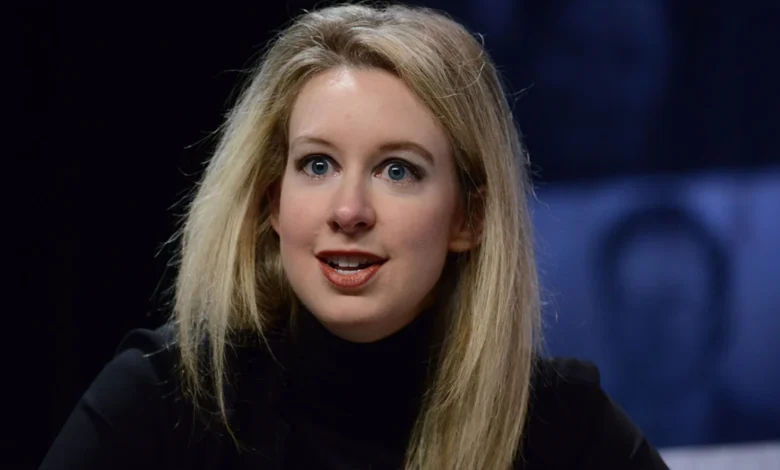
Disgraced Theranos founder Elizabeth Holmes has broken her silence from federal custody with a carefully structured social media statement, issuing her first direct words to the public in years. The message arrived via X, formerly Twitter, on a Sunday afternoon, coming mere weeks before the theatrical debut of a highly anticipated and unconventional documentary directed by Nathan Fielder and Lance Oppenheim. The film, titled You Can See Everything, focuses heavily on the final 34 days leading up to Holmes’s incarceration.
Holmes, who is currently serving an 11-year sentence following her high-profile federal fraud conviction, used the thread to establish a new protocol for her online presence. Moving forward, she announced, any post directly authored by her will carry the specific sign-off "-EAH," while all other communications will continue to be handled by her designated social media management team, a group that includes her partner, Billy Evans.
The renewed public outreach marks a calculated shift in strategy for the former biotechnology wunderkind, who has spent the last several years largely out of the public eye while navigating the federal prison system, legal appeals, and shifting public perception. As media interest surges once again ahead of the A24 documentary release—which recently made headlines for receiving an R-rating for language and graphic nudity—Holmes and her supporters are actively attempting to reframe her narrative for a broader audience.
A Direct Message from Federal Custody
In her Sunday statement, Holmes detailed the psychological and physical toll of her incarceration, highlighting the exact duration of her confinement. "I was silenced for a long time. And then imprisoned. I am fighting to prove my innocence and come home to my babies and the love of my life," Holmes wrote in the post, which was accompanied by a photograph of herself and Evans.
"I have now been imprisoned for 1,216 endless days and nights. During that time, as we fight for freedom, my loved ones have helped manage my account. Billy is one of the people carrying that responsibility for me. He fights fiercely for me and our family. I love him beyond space and time."
The post offered a rare glimpse into the personal dynamics of Holmes’s immediate circle during her imprisonment. Evans, whom Holmes married prior to her trial, has remained a steadfast figurehead in her life, supporting her through multiple legal appeals and helping coordinate her public relations efforts.
Holmes concluded the message by expressing gratitude toward her supporters and invoking religious imagery. "I am profoundly grateful for the support we receive as we fight to expose the truth and challenge deeply entrenched perceptions," she wrote, ending the note with her initials and a biblical citation: "’The truth will set you free.’ John 8:32."
The Rise, Fall, and Legal Chronology of Theranos
To understand the weight of Holmes’s recent statements, it is necessary to examine the meteoric rise and catastrophic collapse of Theranos, the blood-testing startup she founded in 2003 at the age of 19. Holmes dropped out of Stanford University to build a company that promised to revolutionize the healthcare industry with proprietary technology capable of running a comprehensive suite of diagnostic tests using just a few drops of blood obtained from a fingerprick.
At its peak, Theranos attained a valuation of $9 billion, making Holmes a Silicon Valley icon and a billionaire on paper. She secured high-profile backing from venture capital heavyweights, media moguls, and prominent political figures, while gracing the covers of major business magazines. However, the company’s grand promises began to unravel in 2015 following an investigative report by Wall Street Journal journalist John Carreyrou, which revealed that Theranos’s flagship technology, the Edison machine, did not work as advertised and that the company had been quietly using traditional commercial blood analyzers to process patient samples.
The ensuing fallout led to regulatory crackdowns, civil lawsuits, and criminal charges. In January 2022, a federal jury in San Jose, California, convicted Holmes on four counts of wire fraud and conspiracy for deceiving investors about the capabilities of Theranos technology and its financial standing. She was subsequently sentenced in November 2022 to 11 years and three months in federal prison, alongside co-defendant Ramesh "Sunny" Balwani, her former romantic partner and the former chief operating officer of Theranos, who received a nearly 13-year sentence.
Holmes reported to Federal Prison Camp (FPC) Bryan in Texas in May 2023 to begin serving her sentence. Recent reports from ABC News indicate that her projected release date has been adjusted, with plans for her to transition from the Texas facility to a halfway house in 2027, effectively reducing the length of her total locked confinement based on good behavior and standard federal sentencing guidelines.
You Can See Everything: A Candid Look Behind the Curtain
The timing of Holmes’s social media activity is closely tied to the upcoming release of You Can See Everything, an A24 documentary directed by acclaimed filmmaker Nathan Fielder and documentary creator Lance Oppenheim. The project has generated substantial buzz within the entertainment and tech industries due to its unprecedented access and unique stylistic approach.
Unlike traditional investigative documentaries that rely primarily on archival footage, talking-head interviews, and post-mortem analysis, Fielder and Oppenheim reportedly moved into the home of Holmes and Evans during the final 34 days before Holmes surrendered to federal authorities to begin her prison sentence. The film promises an intimate, unvarnished look at the final weeks of her freedom, capturing the psychological weight of impending incarceration while living under intense public scrutiny.
The documentary recently drew additional media attention when the Motion Picture Association (MPA) assigned it an R-rating for "language" and "graphic nudity." This unusual rating for a non-fiction film has fueled speculation regarding the raw and unfiltered nature of the footage captured by Fielder and Oppenheim, who are known for pushing the boundaries of documentary filmmaking and performance art.
Industry analysts note that the release of You Can See Everything represents a critical juncture for Holmes’s public image. While documentaries like HBO’s The Inventor: Out for Blood in Silicon Valley and Hulu’s scripted miniseries The Dropout focused heavily on her deception and corporate malfeasance, Fielder and Oppenheim’s project places viewers directly inside her personal environment, potentially offering a sympathetic humanizing angle that her legal team and supporters have sought to cultivate.
Broader Implications and Strategic Communication
Holmes’s decision to formally delineate her personal social media posts from those of her management team highlights a growing trend among incarcerated high-profile figures who seek to maintain a digital footprint and sway public opinion from behind bars. Deprived of direct internet access, inmates rely on proxies to interface with the digital world, utilizing platforms like X to rally supporters, challenge institutional narratives, and prepare the ground for future legal maneuvers or eventual reentry into society.
Legal experts suggest that while public relations campaigns and social media declarations hold no weight within the formal appellate court system, they play a vital role in shaping the historical record and managing personal legacies. By casting herself as a victim of a "silenced" narrative who is actively "fighting for freedom," Holmes is attempting to mobilize a distinct cohort of online supporters who question the fairness of her prosecution or view her as a scapegoat for broader systemic issues within Silicon Valley’s hyper-aggressive venture capital culture.
At the same time, critics and legal analysts maintain that such messaging ignores the core findings of the federal court: that Holmes knowingly fabricated data, lied to investors, and put patient health at risk through inaccurate blood diagnostics. As the countdown to October 16—the official theatrical release date of You Can See Everything—continues, the public dialogue surrounding Elizabeth Holmes remains deeply polarized, split between those who view her as a convicted felon serving a just sentence and those intrigued by the complex, surreal theater of her ongoing rehabilitation and media presence.