Toto Wolff expresses pride as Mercedes secures the 2026 Formula 1 Constructors Championship following a challenging multi-year resurgence

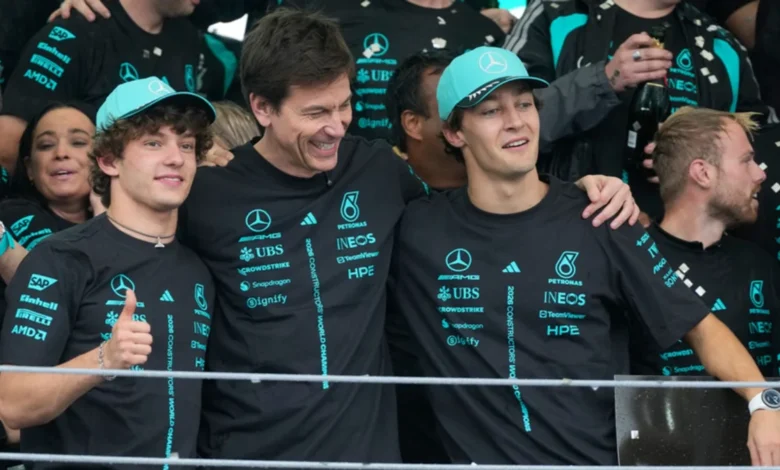
The 2026 Formula 1 season has reached a definitive conclusion regarding the team standings, as Mercedes-AMG Petronas officially claimed the Constructors’ Championship at the Sao Paulo Grand Prix. This milestone marks the ninth title in the team’s illustrious history, effectively ending a five-year championship drought that began after their unprecedented run of eight consecutive titles between 2014 and 2021. For team principal Toto Wolff, the triumph represents more than just a trophy; it serves as a vindication of the organizational resilience required to navigate the complex regulatory overhaul that arrived in 2022.
A Period of Strategic Recalibration
The transition into the 2026 season was framed by the implementation of significant technical regulation changes, specifically focusing on the evolution of ground-effect aerodynamics and the integration of new power unit standards. When the current ground-effect era commenced in 2022, Mercedes found itself at a distinct disadvantage. Despite a history of dominance in the hybrid era, the Brackley-based team struggled to optimize their car’s performance window, leading to a period of technical uncertainty.
Between 2022 and 2025, Mercedes maintained a competitive presence, securing race victories and consistent points finishes, yet they remained unable to mount a sustained challenge against their rivals. The team recorded a series of championship finishes—second, second, third, and fourth—which, while respectable by industry standards, fell short of the high internal benchmarks set by the Silver Arrows. Toto Wolff noted that this period was characterized by a "back and forth" process of identifying fundamental flaws in their design philosophy, which proved to be a grueling test of the team’s internal culture.
The Path to Reclamation
The 2026 campaign was always viewed as a potential turning point for Mercedes. By prioritizing long-term development over short-term gains in the previous two seasons, the team successfully engineered a vehicle that reclaimed the competitive edge. The championship success was bolstered by the impressive performance of Kimi Antonelli, who secured the Drivers’ Championship earlier in the month, signaling a new era of talent for the team.
The chronology of the team’s resurgence can be traced back to the winter of 2025, where structural changes within the engineering department and a refined approach to computational fluid dynamics (CFD) and wind tunnel usage began to yield results. By the time the season opened in Bahrain, it was evident that the Brackley and Brixworth facilities had synthesized a package capable of dominating both qualifying and race trim.
Statistical Context and Historical Standing
With this victory, Mercedes has moved into a tie with Williams Racing, both teams now holding nine Constructors’ Championships. This places them in an elite tier of Formula 1 history, trailing only McLaren, who possess 10 titles, and Ferrari, the sport’s most successful team with 16 championships.
The mathematical consistency of the 2026 season for Mercedes has been stark. Across the season, the team’s ability to maximize points even on weekends where they did not necessarily have the fastest car became the hallmark of their title run. While the Sao Paulo Grand Prix saw a more muted performance—with George Russell finishing fourth and Kimi Antonelli fifth in tricky, wet-weather conditions—the points tally was sufficient to mathematically seal the title with rounds still remaining on the calendar.
The Human Capital: 2,500 Superstars
Toto Wolff has consistently deflected individual praise, opting instead to credit the "2,500 superstars" working across the team’s headquarters in Brackley and their high-performance powertrain division in Brixworth. In the modern era of Formula 1, where the complexity of the cars requires unprecedented levels of cross-departmental collaboration, Wolff’s emphasis on collective effort highlights the shift from individual-centric engineering to a data-driven, holistic team structure.
"Sometimes the drivers, or myself, we are so visible because we are in front of the TV cameras, but there’s so many people that are part of this," Wolff stated in his post-race briefing. This sentiment was echoed by the drivers. George Russell, reflecting on his tenure since joining the team in 2022, emphasized the emotional weight of the journey. "When I joined, we hoped we’d be fighting for championships regularly. To have gone through those four difficult years and now get back to the top is something we should all be incredibly proud of," Russell noted.
Implications for the Competitive Landscape
The immediate impact of Mercedes’ victory is a shift in the perceived pecking order for the 2027 season. By mastering the 2026 regulations, Mercedes has established a technical baseline that provides a significant advantage heading into the next development cycle. Their success validates the investment in personnel and infrastructure made during the lean years, proving that sustained success in Formula 1 requires a tolerance for failure and a systematic approach to recovery.
Furthermore, the emergence of Kimi Antonelli as a championship-winning driver in his debut seasons marks a successful transition in the team’s driver management strategy. By backing young talent, Mercedes has effectively secured a focal point for their future, ensuring that the driving standards remain commensurate with the team’s engineering prowess.
Looking Ahead to the Season Finale
As the circus moves to the Las Vegas Grand Prix, the pressure on Mercedes is arguably lifted, allowing them to approach the final races with a focus on testing components for the 2027 challenger. The logistical and technical requirements of the Las Vegas street circuit, with its high-speed straights and cold-weather challenges, will provide a final test for the W17 platform.
From a commercial and organizational perspective, winning both the Constructors’ and Drivers’ Championships in the same year—a "double" that the team achieved eight times previously—solidifies the commercial value of the Mercedes-AMG brand. It reaffirms their position as the benchmark for automotive excellence in motorsport, a narrative that is highly lucrative for their sponsors and partners.
Analysis of Resilience in Sport
The trajectory of Mercedes provides a compelling case study in organizational psychology within high-performance sports. Often, teams that achieve long-term success suffer from "championship hangover" or structural complacency. Mercedes, however, utilized their four-year decline to strip away inefficient processes. The transition from the dominant W12 and W13 era cars to the current generation was painful, but it forced the team to rethink their reliance on historical data that was no longer relevant under the new aerodynamic rules.
The ability to maintain a positive internal culture during a winless or sub-optimal streak is perhaps the most difficult task for any sports manager. Wolff’s leadership, characterized by transparency regarding the team’s failures, prevented the fragmentation that often occurs when performance dips. By openly discussing the "tough moments," he maintained a sense of shared purpose that likely prevented key technical staff from defecting to competitors.
Conclusion
As the 2026 season winds down, the narrative of the year will be defined by the return of the Silver Arrows to the pinnacle of the sport. The championship is not merely a record in the history books; it is the culmination of a four-year cycle of trial, error, and eventual mastery. For the competitors, the message is clear: Mercedes has regained its momentum, and the challenge for the remainder of the field will be to bridge the gap before the 2027 season commences. With the constructors’ trophy secured, the team can now look toward the future, with the confidence that their organizational structure is robust enough to sustain this new period of success.