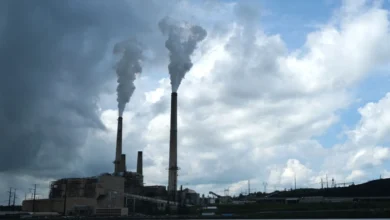
Diesel prices reach historic highs as geopolitical instability cripples global supply chains


The United States energy landscape is currently navigating a period of unprecedented volatility, as diesel fuel prices shattered previous records on September 10, reaching a national average of $5.98 per gallon. This represents a staggering $2.31 increase since late February, when the onset of hostilities between the United States and Iran fundamentally altered the global energy trade. As the primary engine of the American logistics and agricultural sectors, the price surge is reverberating far beyond the fuel pump, threatening to exacerbate inflationary pressures on essential goods and household budgets alike.
The current crisis, characterized by a 61 percent increase in diesel costs over the last several months, has left consumers and industry experts grappling with a market that appears increasingly detached from traditional supply-and-demand cycles. While gasoline prices have also risen—up 41 percent—the disproportionate spike in diesel has been fueled by a "perfect storm" of geopolitical conflict, critically low domestic inventories, and the structural limitations of the global refining capacity.
A Chronology of Escalation
The origins of this fuel crisis can be traced back to the onset of the conflict in the Middle East earlier this year. In February, the initiation of hostilities involving Iran led to the de facto closure of the Strait of Hormuz. This vital maritime chokepoint historically serves as a conduit for approximately 10 percent of the world’s seaborne diesel. The sudden loss of this supply route triggered a immediate tightening of global markets, which were already under strain due to the ongoing repercussions of the 2022 Russian invasion of Ukraine.
In 2022, diesel prices previously touched a record high of $5.82 per gallon as Western sanctions and supply chain disruptions hindered Russian energy exports. Today’s situation is more acute; Russia has effectively ceased supplying the global market in any significant capacity, and domestic refineries in the United States are operating at near-maximum utilization rates, leaving virtually no buffer to absorb further shocks.
Data from the Energy Information Administration (EIA) confirms that domestic inventories of distillates—which include diesel and heating oil—are at their lowest levels since 1982. This inventory deficit is occurring just as the nation enters the autumn season, a period historically associated with increased demand from the agricultural sector for harvesting and the trucking industry for seasonal freight movement.
The Anatomy of the Economic Impact
For the average American, the price of diesel is an "invisible" tax on nearly every aspect of daily life. Because diesel powers the heavy-duty trucks, rail freight, and maritime vessels responsible for moving consumer goods—ranging from fresh produce and dairy to construction materials and medical supplies—the price of fuel is inevitably baked into the final retail cost of these items.
According to a tracker maintained by Brown University, the surge in fuel prices has cost U.S. consumers an additional $46 billion thus far, averaging approximately $350 per household. This economic burden is multifaceted. In the short term, many logistics firms operate under long-term freight contracts that delay the immediate pass-through of fuel costs to retailers. However, as these contracts expire and are renegotiated at current market rates, the inflationary pressure on grocery prices is expected to intensify.
David Ortega, a professor of food economics and policy at Michigan State University, noted that while the initial stages of such a crisis are often absorbed by existing margins within the supply chain, the persistence of high prices makes a direct impact on the consumer unavoidable. "As contracts reprice and fuel surcharges take hold, more of that cost makes its way to the grocery store," Ortega explained.
Regional Disparities and the Heating Oil Crisis
The impact of this fuel shortage is not felt uniformly across the country. In states like California, where regulatory standards and market dynamics drive higher fuel taxes and specialized formulations, the price of diesel has reached as high as $7.91 per gallon. These regional disparities create localized pockets of economic distress, particularly in areas heavily reliant on long-haul trucking for the distribution of essential services.
Compounding the crisis is the looming winter season. In many parts of the United States, particularly the Northeast, heating oil—which is chemically similar to diesel—is the primary fuel source for millions of households. The convergence of high diesel prices and the onset of cold weather creates a dual-threat for these families. Experts at the National Energy Assistance Directors Association have warned that this winter could see households facing historically high energy bills, a prospect made more dire by the current administration’s proposal to eliminate the Low Income Home Energy Assistance Program (LIHEAP).
Mark Wolfe, the association’s executive director, noted that the situation is particularly acute for low-income residents in colder climates who are already struggling with the dual burden of high transportation and heating costs. "If you’re in the Northeast, then this is much more burdensome than anywhere else in the country," Wolfe said. "Families are getting hit by both gasoline and heating oil."
Political and Strategic Implications
With midterm elections approaching, the economic environment is heavily influencing voter sentiment. Historically, fuel prices have been a secondary factor in political calculus, but energy policy analysts believe that the current intensity of the crisis could shift this dynamic.
Kevin Book, head of research at ClearView Energy Partners, suggested that the visibility and severity of these costs, especially in regions where natural gas infrastructure is less prevalent, could turn energy costs into a primary electoral issue. "In cold weather states—particularly those that rely on fuels other than natural gas—it could be a very big deal," Book stated.
The political discourse is further complicated by the administration’s response to the crisis. While the White House has historically sought to buffer the effects of energy price spikes, the fiscal policies proposed—such as the potential reduction in energy assistance funding—have drawn criticism from both sides of the aisle. The challenge for policymakers is balancing the need for immediate relief with the long-term reality that the current supply crisis is a result of structural global shifts rather than transient market fluctuations.
Market Outlook and Long-term Recovery
Market analysts from organizations like GasBuddy and TradeStation offer a sober assessment of the road ahead. Even in the event of an immediate resolution to the conflicts in Iran and Ukraine, experts argue that the path to normalcy will be protracted. The global energy supply chain is not a "switch" that can be toggled back to full efficiency; it requires the restoration of established trade routes, the replenishment of critically low global inventories, and the stabilization of refining throughput.
"After both of those are solved, then once the flow normalizes, that will start to help global inventories recover," said Patrick De Haan, head of petroleum analysis for GasBuddy. "Only after inventories have recovered do diesel prices really see a full decline."
As the United States faces these challenges, the reliance on a strained global energy system has highlighted the vulnerabilities inherent in the current infrastructure. With domestic refineries at capacity and global supply routes volatile, the nation’s ability to insulate itself from international geopolitical instability remains limited. For the coming months, the focus remains on whether the economy can withstand the inflationary pressure of these record-breaking fuel costs, or if the squeeze on the logistics and heating sectors will force a deeper contraction in consumer spending.
As of mid-September, the market shows little sign of immediate cooling, leaving policymakers, logistics companies, and families to brace for a period of continued, and potentially escalating, energy costs.