Indigenous Sovereignty Under Siege From Ancestral Lands to the Digital Frontier Leaders Address Triple Crisis at the United Nations

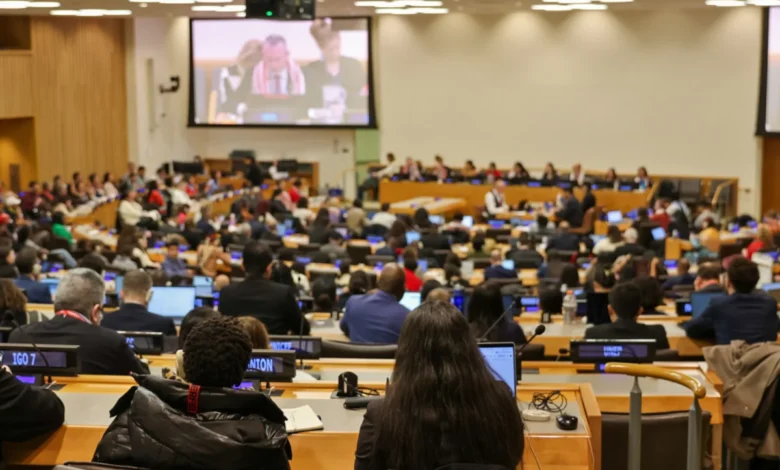
The 25th session of the United Nations Permanent Forum on Indigenous Issues (UNPFII) convened this week against a backdrop of escalating global instability, with Indigenous leaders sounding a clarion call regarding a "triple crisis" of physical violence, digital exploitation, and systemic discrimination. As delegates from around the world gathered at the UN headquarters, the overarching theme—"ensuring Indigenous peoples’ health in the context of conflict"—served as a sobering framework for discussions that spanned from the bloody frontlines of land defense to the invisible frontiers of artificial intelligence. The forum, which remains the world’s largest gathering of Indigenous voices, highlighted a grim reality: despite representing only five percent of the global population, Indigenous peoples are disproportionately targeted in conflicts over resources, excluded from digital protections, and subjected to alarming rates of gender-based violence.
The Deadly Cost of Land Defense and Resource Conflict
The session opened with a stark assessment of the physical dangers facing those who protect ancestral territories. According to data from Front Line Defenders, 31 percent of human rights defenders killed globally in 2023 were Indigenous or working on Indigenous rights. This staggering figure underscores a trend of increasing criminalization, where state and corporate interests use legal and extra-legal means to suppress opposition to extractive projects.
Albert K. Barume, the UN Special Rapporteur on the rights of Indigenous peoples, described a global "crisis of protection." He noted that many Indigenous leaders currently live in hiding or under the threat of arrest because their land rights are not legally recognized or are actively ignored by state authorities. In his interim report to the General Assembly, Barume emphasized that Indigenous land rights are inherent and ancestral, predating the establishment of modern state boundaries. He warned that treating Indigenous lands as mere commodities for rapid development is a fundamental violation of human rights that fuels conflict and undermines global environmental efforts.
The situation is particularly dire in the Sahel region of north-central Africa. Hindou Oumarou Ibrahim, a member of the Mbororo community and former chair of the forum, highlighted how the rapid expansion of militant jihadist groups has devastated the pastoral sector—a cornerstone of Indigenous livelihoods in the region. According to the Global Terrorism Index, the Sahel has become a global epicenter of conflict, where access to water and grazing land has become a daily struggle for survival. Ibrahim noted that the loss of life extends beyond combatants to women and children, whose health and future are being sacrificed in a war over dwindling resources exacerbated by climate change.
Criminalization and State-Sponsored Surveillance in North America
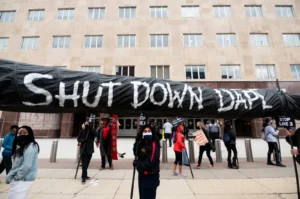
While Latin America remains statistically the most dangerous region for land defenders, the forum also turned its attention to the sophisticated methods of suppression utilized in the United States and Canada. Indigenous leaders from North America documented a disturbing rise in the use of "strategic lawsuits against public participation" (SLAPP), high-tech surveillance, and the labeling of land defenders as "terrorists" or "threats to national security."
Judy Wilson, a Secwépemc elder and knowledge keeper for the British Columbia Native Women’s Association, criticized the Canadian government’s prioritization of rapid resource development over Indigenous sovereignty. She argued that current legislation directly threatens environmental protections and safety, specifically pointing to the risks associated with "man camps"—temporary housing facilities for industrial workers that have been statistically linked to spikes in violence against Indigenous women and girls.
In 2022, the UN Committee on the Elimination of Racial Discrimination called for urgent action regarding land rights cases involving the Western Shoshone, Native Hawaiian, Gwich’in, and Anishinaabe peoples. Advocates at the forum argued that these are not isolated incidents but part of a systemic "cycle of impunity." Amnesty International has reported that abuses against Indigenous defenders are rarely investigated, sending a chilling message that state-sanctioned violence in the name of "development" is permissible.
Digital Extractivism: The New Frontier of AI and Data Sovereignty
A significant portion of the 25th session was dedicated to an emerging threat: the "digital extractivism" powered by generative artificial intelligence (AI). As AI companies seek massive datasets to train their models, Indigenous leaders warn that traditional knowledge, sacred stories, and cultural motifs are being "scraped" from the internet without consent or compensation.
Hindou Oumarou Ibrahim presented a study outlining the double-edged sword of the AI boom. While AI offers potential tools for language revitalization and environmental monitoring, it also replicates colonial patterns of exploitation. Indigenous medicinal knowledge, often passed down through generations, is being commodified by tech giants who do not recognize Indigenous intellectual property rights. Furthermore, because Indigenous peoples are underrepresented in the data used to train AI, algorithmic biases often lead to systems that fail to recognize Indigenous languages or identities, further marginalizing these communities in the digital age.
To counter this, a global movement for "Indigenous Data Sovereignty" is gaining momentum. This movement seeks to replace the Western "open data" model—which views all information as a free resource—with frameworks that protect collective rights. Roimata Timutimu, Data Program Manager for Te Kāhui Raraunga in Aotearoa New Zealand, discussed the Māori Data Governance Model. This initiative ensures that data collection and storage are led by Māori values and priorities, ensuring that "data is whakapapa" (lineage) and maintains its spiritual connection to the community.
The forum highlighted several successful models of digital sovereignty:
- The CARE Principles: Collective Benefit, Authority to Control, Responsibility, and Ethics. These establish a framework for the ethical management of data.
- The OCAP Principles: Ownership, Control, Access, and Possession. Developed by First Nations in Canada, these principles assert a community’s absolute right to own its data.
- Te Hiku Media: A Māori-led initiative that created speech recognition tools for the te reo Māori language, keeping the linguistic data firmly under community control.
Dr. Karaitiana Taiuru, a Māori data sovereignty expert, emphasized during a panel discussion that AI must be grounded in Indigenous customs. Without Indigenous governance, AI risks becoming another tool for cultural erasure.
The Intersection of Gender-Based Violence and Colonization
The forum’s focus on health and conflict naturally led to a deep dive into the crisis of Missing and Murdered Indigenous Women and Girls (MMIWG). In North America and beyond, Indigenous women face violence at rates significantly higher than the general population—a reality that delegates linked to the displacement caused by extractive industries and the fallout of colonial legal systems.
Wednesday’s session featured a review of the Committee on the Elimination of Discrimination against Women (CEDAW) General Recommendation No. 39. Adopted in 2022, this is the first piece of international law specifically dedicated to the rights of Indigenous women and girls. It calls on states to dismantle systemic barriers in education, healthcare, and justice.
However, the implementation of Recommendation 39 remains slow. Claire Charters, an expert in Indigenous global affairs from Ngāti Whakaue, noted that the debate often touches on the "root causes" of discrimination. She argued that much of the internal discrimination within Indigenous communities is a byproduct of colonization, which dismantled traditional social structures that previously afforded women high status and protection.
The statistics presented by Em-Hayley Kūkūtai Walker, a Ngāti Tiipa artist, illustrated the severity of the issue in Aotearoa New Zealand. As of 2025, Māori women comprise 63 percent of the female prison population, and nearly half of Māori women have experienced intimate partner or sexual violence. Walker’s emotional plea to the UN—"Hear the cry of my people"—called for the recognition of tapu (sacredness) and mana (authority) as essential components of justice for Indigenous women.
Analysis of Implications: A Call for Systemic Reform
The 25th session of the UNPFII has made it clear that the struggle for Indigenous rights is no longer confined to physical borders. The transition from traditional land defense to digital sovereignty represents an evolution in the global Indigenous movement. The forum’s discussions suggest several critical implications for international policy:
First, there is a growing demand for international law to move beyond "recognition" toward "restitution." Indigenous leaders are no longer satisfied with symbolic gestures; they are demanding the return of land tenure and the legal right to veto extractive projects on their territories.
Second, the tech industry is facing a reckoning. As Indigenous data sovereignty gains traction, companies may soon find themselves legally and ethically obligated to negotiate with Indigenous nations before using their cultural data. This could lead to a new era of "digital treaties" between tech corporations and Indigenous communities.
Third, the focus on Recommendation 39 signals a shift toward intersectional justice. By addressing the specific needs of Indigenous women and girls, the UN is acknowledging that universal human rights frameworks have historically failed to protect the most vulnerable members of Indigenous societies.
As the session concludes, the message from the UNPFII is unambiguous: the health and sovereignty of Indigenous peoples are inseparable from the health of the planet and the ethics of the digital future. Without robust protections for land defenders and strict governance over AI and data, the "triple crisis" will continue to threaten not only the 476 million Indigenous people worldwide but the global fight for human rights and environmental stability.