The Paradox of Progress Indigenous Sovereignty and the Environmental Cost of Artificial Intelligence



Indigenous leaders and environmental advocates at the United Nations Permanent Forum on Indigenous Issues (UNPFII) have issued a stark warning regarding the rapid expansion of artificial intelligence. While the technology offers unprecedented tools for monitoring illegal logging, tracking wildfires, and protecting traditional territories, the physical infrastructure required to power these digital systems is driving a new wave of resource extraction that threatens the very lands AI is meant to save. This emerging paradox highlights a tension between the digital frontier and the physical reality of Indigenous territories, where data centers and mineral mines are increasingly infringing on ancestral waters and forests.
The dual nature of AI was central to a recent study published by Hindou Oumarou Ibrahim, a prominent Mbororo activist from Chad and former chair of the Permanent Forum. Her research underscores a systemic conflict: the "immaterial" world of algorithms depends on a massive physical footprint of energy, water, and critical minerals. As global tech giants race to achieve AI supremacy, the demand for these resources often leads to land-grabbing, water overexploitation, and land degradation in regions where Indigenous peoples have served as environmental stewards for millennia.
The Evolution of Indigenous Land Stewardship and Technology
For centuries, Indigenous communities have maintained the world’s most intact ecosystems through traditional knowledge systems that do not rely on modern technology. However, as the pace of climate change and illegal industrial activity accelerates, many communities have turned to advanced tools to bolster their defenses. The integration of technology into Indigenous land management has evolved through several distinct phases:
- Participatory Mapping (1990s–2000s): Communities began using basic GPS and paper maps to document ancestral boundaries and defend legal land claims against industrial encroachment.
- Remote Sensing and Drones (2010s): The use of satellite imagery and Unmanned Aerial Vehicles (UAVs) allowed for real-time monitoring of remote areas that were otherwise difficult to patrol on foot.
- The AI and Predictive Modeling Era (2020s–Present): Today, Indigenous groups are utilizing machine learning to analyze vast datasets, allowing them to predict where deforestation might occur next or to track the migratory shifts of wildlife affected by a warming planet.
In Brazil’s Acre state, the Katukina/Kaxinawá Indigenous Reserve serves as a primary example of this technological evolution. The reserve, which faces high risks of illegal encroachment, employs 21 Indigenous agroforestry agents who use an AI tool developed by Microsoft and the nonprofit Imazon. This system forecasts deforestation risks, allowing agents to intervene before the trees are felled. Siã Shanenawa, an agent in the reserve, noted that the ability to detect hunters, loggers, and fires before they penetrate deep into the territory has significantly increased the safety and security of the community.
AI as a Tool for Climate Resilience
The benefits of AI, when applied under Indigenous leadership, extend beyond simple surveillance. In the Canadian Arctic, Inuit communities in Nunavut are blending traditional ecological knowledge with predictive AI models to navigate the changing landscape. As rising temperatures alter the thickness of sea ice and the migration patterns of fish, these models help locate new fishing grounds, ensuring food security for the region.

Similarly, in Chad, Mbororo pastoralists are using a combination of participatory mapping and satellite data processed through AI to anticipate severe droughts. These tools allow them to secure "transhumance corridors"—the routes used for moving livestock—boosting their resilience against the increasingly erratic weather patterns of the Sahel.
In South America, the Rainforest Foundation US has integrated AI into its "Rainforest Alert" system. According to Cameron Ellis, the organization’s field science director, AI-derived remote sensing products can process volumes of satellite data that would be impossible for human monitors to analyze manually. This allows communities to identify patterns linked to mining or agricultural expansion and respond with legal or physical interventions more rapidly than ever before.
The Heavy Footprint of the Digital Cloud
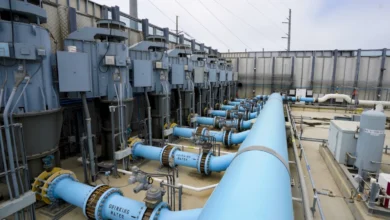
Despite these benefits, the infrastructure supporting AI is causing significant environmental strain. Data centers—the massive warehouses of servers that process AI algorithms—require immense amounts of electricity and water for cooling. According to industry data, a single large data center can consume as much electricity as a medium-sized city. Furthermore, the International Energy Agency (IEA) estimates that data center energy consumption could double by 2026 as AI integration becomes more widespread.
The impact of this energy and water demand is being felt globally:
- Thailand: In the Chonburi and Rayong provinces, residents have raised alarms over the expansion of data centers amid existing water shortages and industrial pollution.
- Mexico: In the state of Querétaro, local communities have expressed concern that the "AI boom" is sucking up local water supplies and straining the electrical grid, leading to rising costs for residents.
- United States: In rural Pennsylvania, the conversion of land for data centers has sparked local opposition over noise pollution and the environmental cost of powering these facilities with fossil fuels or diverted renewable energy.
Beyond the data centers themselves, the production of AI hardware requires critical minerals such as lithium, cobalt, and copper. A significant portion of the world’s untapped mineral reserves is located on or near Indigenous lands. This has led to what some activists call "green colonialism," where the transition to "clean" or "smart" technology drives the same extractive and exploitative patterns that characterized the fossil fuel era.
Data Sovereignty and Digital Rights
A critical concern raised at the UNPFII is the issue of data sovereignty. Indigenous leaders argue that when outside corporations or governments deploy drones and satellites over their lands without consent, it can lead to the exposure of sensitive information. The location of sacred sites, the whereabouts of uncontacted tribes, or the specific habitats of endangered medicinal plants can be commodified or exploited if the data is not protected.

Lars Ailo Bongo, a professor at UiT The Arctic University of Norway and leader of the Sámi AI Lab, emphasized that AI is not yet inclusive enough. He pointed out that while there is significant interest among Sámi developers to create AI models aligned with their cultural norms, a lack of funding from state governments (Norway, Finland, and Sweden) prevents these projects from scaling. Without Indigenous-led development, AI models risk being built on biased datasets that ignore or misrepresent Indigenous worldviews.
Kate Finn, executive director of the Tallgrass Institute and a citizen of the Osage Nation, stated that the fundamental requirement for any AI-related project on Indigenous lands must be "Free, Prior, and Informed Consent" (FPIC). This international legal standard ensures that Indigenous peoples have the right to give or withhold consent to projects that may affect them or their territories.
Analysis of Implications and Future Outlook
The "paradox of AI" reflects a broader challenge in the global effort to address climate change. As the world pivots toward high-tech solutions, the environmental cost of those solutions is often externalized to marginalized communities. For AI to become a true ally to Indigenous stewardship, a shift in governance is required.
The Path Forward:
- Regulatory Frameworks: Governments must implement stricter regulations on data center placement and resource consumption, ensuring they do not compete with local communities for essential resources like water.
- Direct Funding: Instead of relying on "trickle-down" technology from tech giants, Indigenous organizations require direct funding to build their own digital infrastructure and hire their own developers.
- Equitable Partnerships: Tech companies must move beyond viewing Indigenous peoples as "end-users" or "data points" and instead engage with them as sovereign partners with a right to control how their land and knowledge are digitized.
The study by Hindou Oumarou Ibrahim concludes that technology alone is not a panacea. "Technology on its own doesn’t protect forests—people do," the report notes. The success of AI in environmental protection will ultimately depend on whether it is used to empower the people on the ground or whether it becomes another tool for the extraction of resources and knowledge. As the UNPFII continues its deliberations, the message from Indigenous leaders is clear: the digital future must not be built at the expense of the physical past.