Solving a Half-Century Mystery: How Museum Specimens Uncovered the Killer of Brazil’s Atlantic Forest Frogs

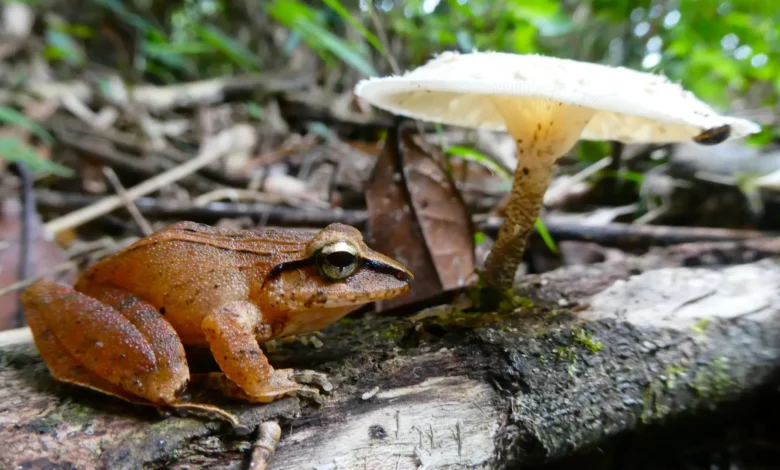
For nearly 50 years, the unexplained disappearance of amphibian populations within Brazil’s Atlantic Forest has stood as one of the most baffling cold cases in the history of wildlife epidemiology. Since the 1970s, ecologists and herpetologists have grappled with the sudden, catastrophic decline of species in one of the planet’s most biodiverse hotspots. While various hypotheses—ranging from localized climate shifts to extreme weather volatility—were proposed, the definitive cause remained elusive. New research published in the journal Molecular Ecology has finally provided a breakthrough, identifying a deadly fungal pathogen as the silent engine behind these historical die-offs.
The collaborative study, spearheaded by Jack Boyette of the Smithsonian’s National Zoo and Conservation Biology Institute (NZCBI) and Pennsylvania State University (PSU), suggests that the chytrid fungus, Batrachochytrium dendrobatidis (Bd), was the primary driver of these ecological collapses. By leveraging archival data from museum collections, the team has successfully reconstructed a timeline of contagion that provides a template for understanding how emerging infectious diseases reshape global biodiversity.
The Chronology of a Silent Epidemic
The mystery centers on the Boracéia Biological Station, a critical research site in the Atlantic Forest. Between 1979 and 1982, observers noted a precipitous drop in the abundance and diversity of local frog populations. At the time, global scientific understanding of amphibian pathogens was in its infancy. In fact, the fungus responsible for chytridiomycosis was not formally identified and taxonomically described until 1999—nearly two decades after the initial collapse at Boracéia.
By the time scientists identified Batrachochytrium dendrobatidis as a global threat, the pathogen had already swept through continents. Originating in Asia, the fungus likely facilitated the extinction or severe decline of hundreds of amphibian species worldwide during the 1970s and 80s. Because the "patient zero" event occurred before widespread awareness of the disease, the retrospective analysis of these die-offs was hindered by a lack of baseline biological data.
Investigating the Archive: The Role of Natural History Museums
To overcome the lack of early data, researchers turned to the Smithsonian’s National Museum of Natural History. They focused on the vast collection of specimens gathered by William Ronald Heyer, a former curator of amphibians and reptiles. Heyer conducted five rigorous expeditions at the Boracéia Biological Station: two prior to the 1979 decline and three in the years following the collapse.
This collection acted as a biological time capsule. The research team analyzed tissue samples from over 370 preserved amphibians, representing 17 distinct species. The results were definitive. Specimens collected prior to 1979 were universally free of the chytrid fungus. However, in the post-1979 samples, the prevalence of the pathogen spiked to over 50 percent. This temporal correlation provides the strongest evidence to date that the arrival of the fungus in the late 1970s was the catalyst for the ecological transition at the site.
The Paradox of Resistance and Mortality
A nuanced element of the study revealed a counterintuitive trend: the species that suffered the most dramatic population crashes were notably absent from the "infected" category in the museum records. Conversely, species that showed higher resilience and population stability were often found to be carriers of the fungus.
Jack Boyette, the lead researcher on the project, explains this as a function of disease susceptibility and survival velocity. "The species that did not decline may have naturally tolerated the fungus, allowing them to carry the pathogen without suffering mass mortality," Boyette noted. "By contrast, the species that declined most dramatically may have been so physiologically susceptible that they died so rapidly after infection that few, if any, infected individuals were ever collected for the museum."
This finding suggests that the "missing" species were victims of an acute, rapid-onset version of the disease, whereas the surviving species possessed or evolved a level of immunological tolerance that prevented immediate mortality. This distinction between infection prevalence and mortality rates is a critical insight for future conservation strategies.
Implications for Global Conservation and Pathogen Surveillance
The findings at Boracéia serve as a cautionary tale for modern epidemiology. Michael Campana, a genomicist at NZCBI, highlighted that these results underscore the indispensable nature of natural history museums. "Museum collectors could not have anticipated how important their collections would be to our modern conservation challenges," Campana stated. "Without them, we would never be able to detect pathogens that went unnoticed for decades and reconstruct disease outbreaks that would otherwise remain a mystery."
This capability is particularly vital as the scientific community faces new, emerging threats. For instance, the fungal pathogen Batrachochytrium salamandrivorans (Bsal), which is currently devastating salamander populations in Europe, poses a significant risk to North American biodiversity. By understanding how the initial chytrid outbreak unfolded in Brazil, researchers hope to develop better early-warning systems and mitigation strategies to intercept future pandemics before they result in widespread extinction.
Signs of Recovery: A Look at the Modern Atlantic Forest
In a development that provides a glimmer of hope, the research team returned to the Boracéia Biological Station between 2022 and 2024 to assess the current state of the amphibian community. Partnering with researchers from the University of São Paulo, they located 12 of the 17 species documented in Heyer’s original collections. While five species remain missing—raising concerns that they may have been extirpated—the majority have managed to persist.
The continued presence of the chytrid fungus in the current environment suggests that the remaining frog populations have achieved a state of equilibrium. Through natural selection, successive generations have likely developed greater tolerance to the pathogen. This recovery trajectory offers a template for how ecosystems might stabilize after the initial, volatile "invasion phase" of an infectious disease.
Future Research and Pathogen Genomics
The investigation is far from over. The research team is currently utilizing advanced DNA extraction techniques from the museum specimens to identify the specific genetic mechanisms that governed the amphibians’ varying responses to the disease. By comparing the genomes of the extinct or decimated species against those that thrived, scientists hope to pinpoint the immunological traits that confer resistance.
Furthermore, the team is exploring the use of ancient environmental DNA (eDNA). By analyzing soil and water samples for genetic traces of organisms and pathogens, scientists hope to reconstruct the environmental history of regions where physical specimens are unavailable. This multi-pronged approach—combining traditional specimen analysis with modern genomic sequencing—is creating a clearer, more granular history of the chytrid pandemic.
As the global scientific community continues to navigate the "post-chytrid" landscape, the Boracéia study stands as a benchmark for historical reconstruction. It emphasizes that while extinction is often a permanent loss, the study of the past is a dynamic tool. By decoding the history of these "cold cases," researchers are not merely documenting the ghosts of biodiversity; they are identifying the biological blueprints necessary to protect the species that remain in an increasingly interconnected and pathogen-prone world.
The integration of museum archival data with modern molecular biology continues to prove that even specimens collected half a century ago possess the power to inform the future of conservation, ensuring that the legacy of these frogs contributes to the survival of those yet to come.