Doge Dividend Checks Reality

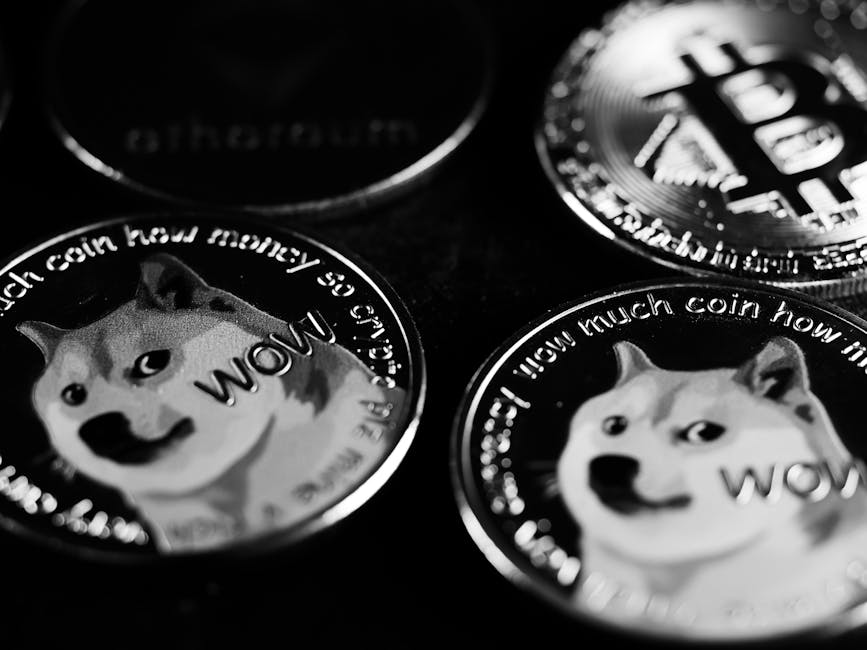
Doge Dividend Checks: Unpacking the Reality of Dogecoin Rewards
The concept of "doge dividend checks" often sparks curiosity, implying a direct payout from Dogecoin holdings akin to traditional stock dividends. However, understanding the reality requires dissecting the mechanics of cryptocurrency and the specific nature of Dogecoin. Unlike publicly traded companies that distribute a portion of their profits to shareholders, Dogecoin, as a decentralized cryptocurrency, operates on a fundamentally different paradigm. There is no central authority, no corporate entity, and therefore, no mechanism for issuing formal dividend checks. The notion of a "doge dividend" is largely a misnomer, often arising from misunderstandings about how cryptocurrency rewards are generated and distributed, or perhaps a hopeful interpretation of a more complex system. This article aims to clarify what Doge dividend checks aren’t and what real-world mechanisms might give rise to a similar perception of receiving rewards for holding Dogecoin.
One of the primary reasons the term "doge dividend" is misleading is the absence of a profit-generating entity. Public companies issue dividends because they generate profits from their business operations. These profits can then be distributed to shareholders as a reward for their investment. Dogecoin, conversely, is a digital asset whose value fluctuates based on market demand, speculation, adoption, and network activity. Its "value" is not derived from underlying assets or profit streams in the traditional sense. Therefore, there is no profit pool from which to draw for dividend payments. The decentralized nature of Dogecoin means that any issuance of "dividends" would require consensus from the entire network, a highly improbable and logistically challenging undertaking.
While formal dividend checks are not a feature of Dogecoin, the underlying desire for rewards associated with holding cryptocurrency is understandable. This desire can be fulfilled through several mechanisms within the broader crypto ecosystem, some of which might be colloquially referred to as "doge dividends." The most prevalent of these is through staking, though Dogecoin itself does not currently employ a Proof-of-Stake (PoS) consensus mechanism that would directly facilitate staking rewards for individual holders. Dogecoin primarily operates on a Proof-of-Work (PoW) system, similar to Bitcoin, where "miners" expend computational power to validate transactions and secure the network. These miners are rewarded with newly minted Dogecoin and transaction fees. Holding Dogecoin doesn’t inherently grant you a share of these mining rewards.
However, the landscape of cryptocurrency reward mechanisms is constantly evolving. While Dogecoin’s core protocol doesn’t support direct staking by individual holders, there are indirect ways through which Dogecoin owners might receive rewards that could be perceived as dividends. One such avenue is through cryptocurrency exchanges and third-party platforms that offer yield-generating services. Some platforms allow users to lend their Dogecoin to other traders or institutions, earning interest in return. This interest can be viewed as a form of passive income, not unlike a dividend, though it originates from lending activities rather than direct network rewards. The terms and risks associated with these lending platforms are crucial to understand, as they are often managed by centralized entities and may carry counterparty risk.
Another way the concept of "doge dividend" might arise is through the creation of derivative products or specialized tokens. For instance, a project might launch a token that is pegged to or generates value based on Dogecoin’s performance. Holders of this derivative token could potentially receive payouts or benefits tied to Dogecoin’s price action or network activity. These are not direct dividends from Dogecoin itself but rather rewards generated by an entirely separate, albeit related, crypto asset. It’s imperative to distinguish between holding the native Dogecoin token and holding other tokens that might reference or interact with Dogecoin. The regulatory scrutiny and inherent risks of such derivative projects are also significant considerations.
The speculative nature of Dogecoin also plays a role in the perception of potential "dividends." Many who hold Dogecoin do so with the expectation of significant price appreciation. If the price of Dogecoin increases substantially, a holder’s portfolio value increases, which can feel like a reward for their investment. This appreciation, however, is capital gains, not a distributed dividend. It’s an unrealized gain until the Dogecoin is sold. The "hodling" strategy, a term deeply embedded in crypto culture, emphasizes holding assets long-term for potential future growth, and this growth can be mistaken for an ongoing payout.
For those seeking to earn rewards from their cryptocurrency holdings, understanding the specific consensus mechanisms and available reward structures is paramount. Bitcoin, also a PoW coin, doesn’t offer direct staking rewards to holders. Ethereum, after its transition to Proof-of-Stake (the Merge), now allows ETH holders to stake their coins directly or through staking pools to earn rewards. These are tangible network rewards that contribute to the security and operation of the blockchain. Dogecoin, currently, does not have this feature. Therefore, any "doge dividend check" is unlikely to come from the Dogecoin network itself.
The term "doge dividend" could also be a misinterpretation ofirdrops or promotional campaigns. While less common for established cryptocurrencies like Dogecoin, new projects sometimes distribute tokens to holders of other cryptocurrencies as a form of marketing or community building. If a project were to launch a new token and decide to airdrop a portion of it to existing Dogecoin holders, this could be perceived as a "dividend." However, this is an external event, not an inherent feature of Dogecoin. These airdrops are typically one-time events and depend entirely on the generosity and strategy of the distributing project.
Furthermore, the allure of "dividends" in the crypto space can be amplified by community initiatives and meme culture. Dogecoin’s origins as a meme coin mean that community sentiment and viral trends can significantly influence its price and perceived value. While there isn’t a formal dividend system, community-driven pumps or the anticipation of such events could create a feeling of shared prosperity, which might be loosely termed as a "dividend" in informal discussions. However, this is driven by market sentiment and speculation, not by a structured payout.
The technical realities of blockchain and Dogecoin’s architecture are key to dispelling the myth of formal doge dividend checks. Blockchains are distributed ledgers that record transactions. Miners (in PoW systems) validate these transactions and add new blocks to the chain. They are incentivized by block rewards (newly minted coins) and transaction fees. For an individual Dogecoin holder, simply possessing DOGE doesn’t automatically qualify them for a share of these rewards. The rewards are earned by the entities actively participating in the network’s consensus mechanism, which in Dogecoin’s case, are miners.
The future of Dogecoin could, in theory, see changes that might introduce reward mechanisms for holders. However, any such fundamental shift would require a significant upgrade to the Dogecoin protocol, involving consensus from the vast majority of its decentralized network. This is a complex and lengthy process. For now, the focus of Dogecoin’s development, as driven by its community and core developers, is often on improving its scalability, transaction speed, and broader adoption as a medium of exchange, rather than on implementing holder-based reward systems akin to dividends.
The potential for scams and misleading information surrounding "doge dividend checks" cannot be overstated. In the speculative world of cryptocurrency, individuals looking for easy gains are often targets. Promises of guaranteed returns or "dividend checks" from unofficial sources are almost always red flags for fraudulent schemes. It is crucial for anyone holding or considering holding Dogecoin to rely on official sources of information, understand the underlying technology, and be highly skeptical of any claims that sound too good to be true, especially those involving guaranteed payouts from decentralized assets.
In conclusion, the term "doge dividend checks" is a mischaracterization. Dogecoin, as a decentralized cryptocurrency operating on a Proof-of-Work consensus mechanism, does not have a corporate structure or profit stream from which to issue dividends. While indirect methods of earning rewards, such as through lending platforms or potentially future protocol upgrades, might exist or emerge, they are not equivalent to traditional dividends. The primary drivers of value and potential "rewards" for Dogecoin holders are market appreciation, adoption, and the broader speculative ecosystem surrounding the cryptocurrency. Understanding these distinctions is vital for navigating the Dogecoin market and the wider cryptocurrency space responsibly and with realistic expectations. The allure of easy returns should always be tempered with a thorough understanding of how these digital assets function and the inherent risks involved.


