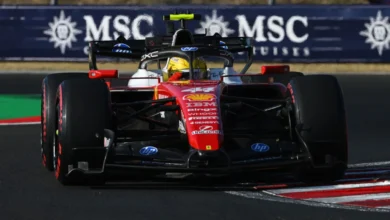
Haas confirm Esteban Ocon departure as Formula 2 championship leader Rafael Camara prepares for surprise Formula 1 debut at Sao Paulo Grand Prix

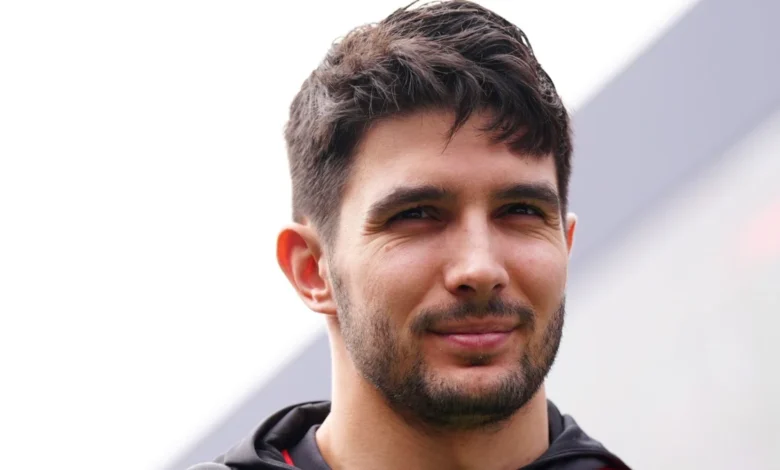
In a dramatic shift for the 2026 Formula 1 season, the Haas F1 Team has officially confirmed that Esteban Ocon will not return to the cockpit for the remainder of the calendar year. The American-owned squad has announced that Ferrari Academy protégé and current Formula 2 championship leader, Rafael Camara, will be fast-tracked to the pinnacle of motorsport, making his competitive debut at this weekend’s Sao Paulo Grand Prix at the historic Interlagos circuit.
The decision to part ways with Ocon follows a period of intense speculation that began during the Mexico City Grand Prix, where the Frenchman was abruptly withdrawn from proceedings mid-weekend. While the team has remained tight-lipped regarding the specific circumstances behind the split, the confirmation effectively ends Ocon’s two-year tenure with the team. This development marks the second time in as many rounds that Haas has been forced to make a last-minute substitution, highlighting a volatile conclusion to their 2026 campaign.
A Chronology of Instability
The turbulence within the Haas garage became public during the Mexico City race weekend. Following the sudden removal of Ocon, the team drafted in Japanese endurance specialist Ryo Hirakawa to fill the vacancy. Hirakawa, who competes in the World Endurance Championship, provided a stellar account of himself, navigating the complexities of the Autódromo Hermanos Rodríguez to secure a 10th-place finish. His performance was bolstered by a series of post-race time penalties handed down to McLaren’s Oscar Piastri and the Alpine pairing of Pierre Gasly and Franco Colapinto, which elevated the debutant into the points.
However, Hirakawa’s tenure was always intended to be a temporary measure. With the World Endurance Championship scheduling conflicts in Italy preventing him from continuing with the team in Brazil, Haas was forced to look to their long-term pipeline. Rafael Camara, already contracted to join the team as a permanent driver for the 2027 season, has been moved up the priority list to gain vital experience in the final four races of the current year.
The Rise of Rafael Camara
The promotion of Rafael Camara is a significant vote of confidence in the Brazilian’s potential. Currently leading the Formula 2 standings, Camara has been a standout performer within the Ferrari Driver Academy. By placing the 21-year-old in the car for his home race in Sao Paulo, Haas is providing the young driver with an high-pressure environment to acclimate to Formula 1 machinery.
The logistical challenge of integrating a rookie into an active F1 team during a race weekend cannot be overstated. Unlike the extensive testing programs afforded to drivers in previous eras, modern regulations limit private testing, making the free practice sessions on Friday and Saturday critical for data acquisition and driver familiarization. Camara will be paired alongside the team’s other rising star, British driver Ollie Bearman, who has also been earmarked as a pillar of the team’s future strategy.
Team Principal Perspective and Internal Protocol
Haas team principal Ayao Komatsu has been at the center of the unfolding narrative. During the Mexico City Grand Prix, Komatsu declined to offer a granular explanation regarding the termination of Ocon’s participation, citing the private nature of the contractual dissolution. In a formal statement released by the team, Komatsu sought to frame the decision as a strategic necessity rather than a reactionary measure.
"TGR Haas F1 team can confirm that Esteban Ocon will no longer compete on its behalf in the 2026 FIA Formula 1 world championship," the statement read. "Such decisions are never made lightly, as was the case in Mexico City—but then, as now, we feel this is firmly in the best interest of the team moving forward. The conversations that ultimately unfolded between the team and Esteban remain an internal matter, and we will continue to respect the private nature of closed-door situations."
The refusal to detail the conflict suggests a deep-seated disagreement, potentially involving performance clauses or breach of team protocols. By keeping the details behind "closed doors," the team is attempting to limit the reputational fallout for both the driver and the organization, though the sudden nature of the exit has inevitably sparked discourse across the paddock.
The Financial and Competitive Implications
From a competitive standpoint, the departure of Ocon leaves a vacuum in terms of experience. Ocon, a race winner in Formula 1, provided a baseline of performance that was instrumental in the team’s mid-field development. The shift to a lineup consisting of two young, inexperienced drivers—Bearman and Camara—is a calculated risk. While it provides the team with a "clean slate" for their 2027 rebuilding phase, it may jeopardize their standing in the Constructors’ Championship for the remainder of 2026.
Haas currently finds itself in a tight battle for championship points, where every position in the standings correlates to significant financial rewards under the sport’s commercial rights structure. Replacing an established driver with a rookie during the final leg of a "triple header"—a grueling stretch of three consecutive race weekends—places immense pressure on the engineering staff to provide a car that is both quick and predictable for a novice pilot.
Looking Toward the Final Triple Header
As the paddock prepares for the Sao Paulo Grand Prix, the focus remains on how Camara will adapt to the high-downforce, high-intensity environment of Interlagos. The circuit, famous for its unpredictable weather and technical layout, is an unforgiving venue for a debutant.
Beyond Brazil, the team faces the daunting task of finalizing their lineup for the closing stages of the season in Las Vegas, Qatar, and Abu Dhabi. While Camara is confirmed for the Sao Paulo event, the team has yet to formally announce if he will retain the seat for the remainder of the year, though industry analysts suggest that a successful outing in Brazil would almost certainly secure his place for the final three rounds.
The Broader Context of F1 Driver Market Fluidity
The Haas situation highlights a growing trend in Formula 1: the increasing willingness of teams to terminate contracts mid-season when developmental goals or internal dynamics reach an impasse. Historically, driver changes were rare during the season unless injury or severe lack of sponsorship occurred. However, the modern F1 landscape, characterized by intense budget cap constraints and the urgent need to evaluate young talent, has led to a more "results-driven" environment.
For Esteban Ocon, the departure represents a crossroads. Having established himself as a capable and resilient competitor over several years, his exit from Haas will lead to inevitable questions about his future in the sport. Conversely, for the Ferrari Academy and the Haas organization, the promotion of Camara is an aggressive move to accelerate the maturation of their future star.
As the F1 circus descends upon Sao Paulo, the eyes of the sport will be fixed on the Haas garage. The narrative has shifted from the competitive aspirations of the weekend to the internal transformation of the team. With the championship hunt intensifying and the 2026 season reaching its crescendo, the introduction of Rafael Camara is not merely a personnel change—it is a signal that Haas is shifting its focus entirely toward the next generation, regardless of the immediate risks involved.
The schedule for the weekend, as confirmed by Sky Sports F1, will see the usual intense rhythm of practice, qualifying, and race day unfold, providing the ultimate stage for the next chapter in the Haas story. Whether this move proves to be a masterstroke or a logistical complication remains to be seen, but for the moment, the team’s commitment to its new path is absolute.
Related posts: