The catastrophic rise of permafrost detachment slides in the Canadian Arctic signals a dangerous new phase of climate instability

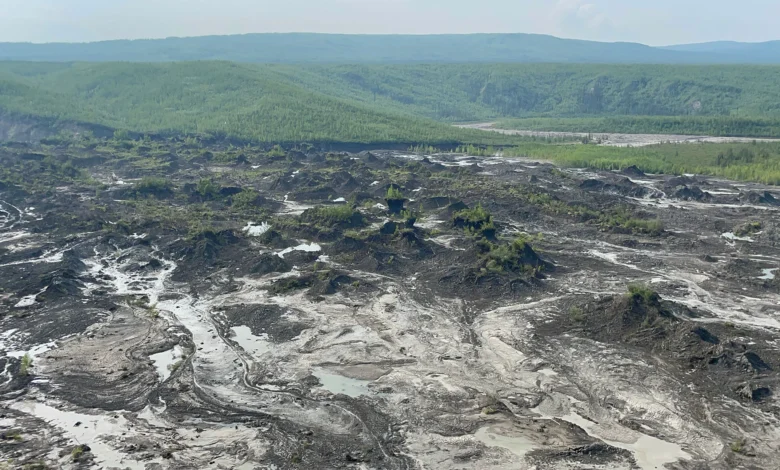
Nearly a decade ago, a helicopter pilot traversing the rugged, remote wilderness of Canada’s Northwest Territories encountered a sight that defied conventional geological explanation: a landslide of such immense proportions that it had effectively dammed a river, forcing the creation of an entirely new lake. While the physical alteration of the river’s course was immediate, the true significance of the event lay hidden beneath the churned earth. Scientists have since identified this phenomenon as a “permafrost detachment slide,” a novel and alarming classification of terrain failure that represents a significant, and largely misunderstood, byproduct of a warming Arctic.
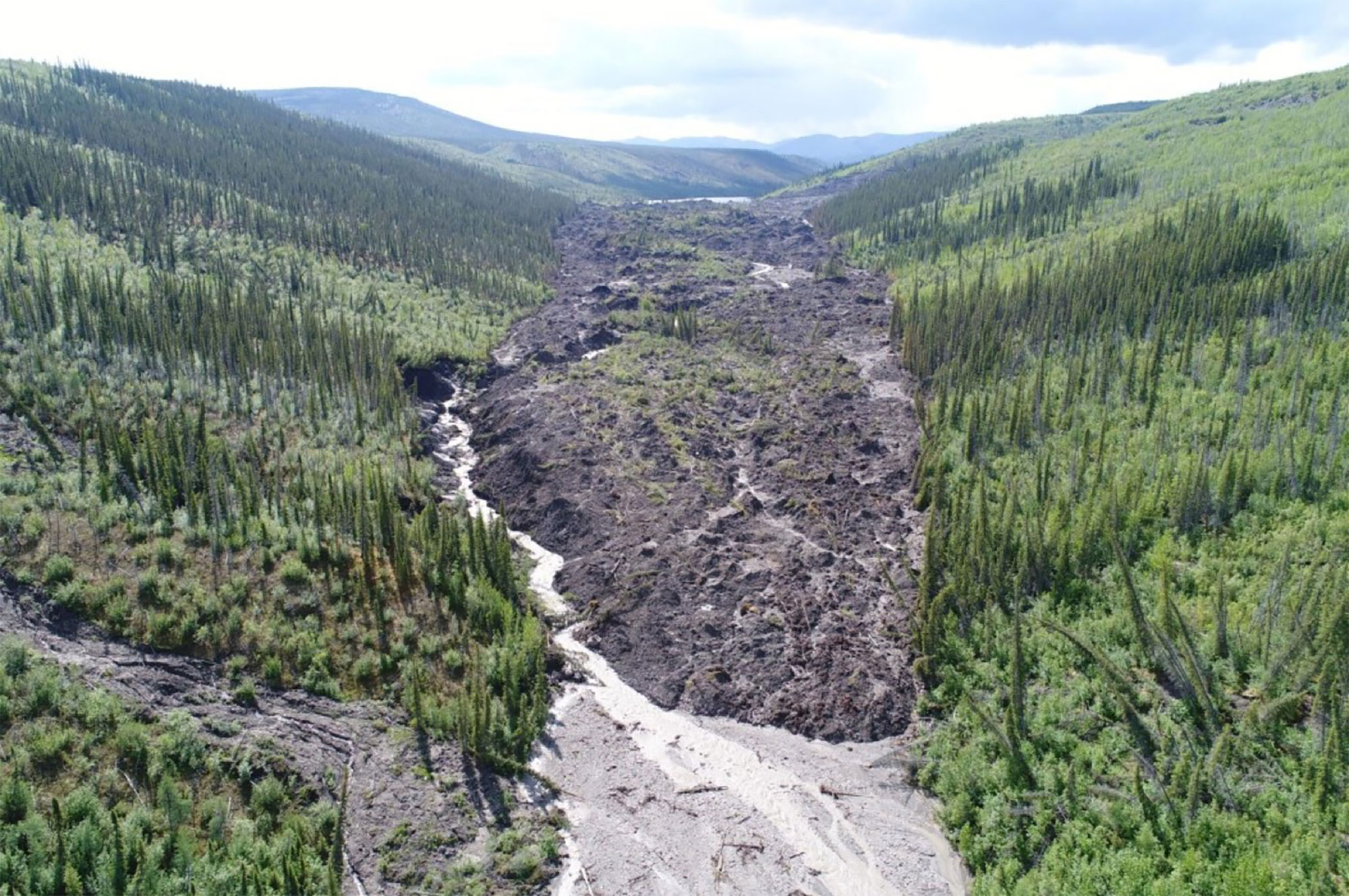
A recent study published in the scientific journal Geophysical Research Letters provides a detailed analysis of two such catastrophic events in the region. The first, occurring along the Johnson River in 2017, and the second, along the Redstone River in 2018, together displaced approximately 30 million cubic yards of earth. While traditional landslides are typically triggered by heavy rainfall saturating loose rock and soil, these permafrost detachments are fundamentally different. They represent a structural failure originating from within the frozen ground itself, a process characterized by the deep-seated degradation of permafrost integrity.
The Chronology of a Slow-Motion Collapse
The origins of these massive failures can be traced back nearly three decades to 1995, when a severe wildfire swept through the Northwest Territories. The fire served as the primary catalyst, stripping away the surface vegetation—the "thermal shield"—that had historically regulated the temperature of the permafrost by insulating it from direct solar radiation during the long, sun-drenched days of the northern summer.
For roughly 20 years, the impact of this loss was incremental. As the surface layer warmed, the thermal signature of the sun began to migrate downward. Eventually, this heat reached the base of the permafrost layer. According to Joseph Young, the lead author of the study and a former geoscientist at the University of Alberta, this heat penetration initiated a bottom-up degradation process. As the base of the frozen soil warmed even slightly, tension cracks began to propagate throughout the subterranean structure.
These cracks created pathways for surface water to infiltrate the permafrost, further destabilizing the mixture of ice, soil, and organic matter. Data suggests that the land began a slow creep, moving at a rate of several feet per year, before accelerating to nearly 80 feet annually. This period of instability culminated in a sudden, violent detachment where the landscape essentially lost its cohesion, collapsing in a matter of days or hours.
Geological Mechanics: Why These Slides Are Unique
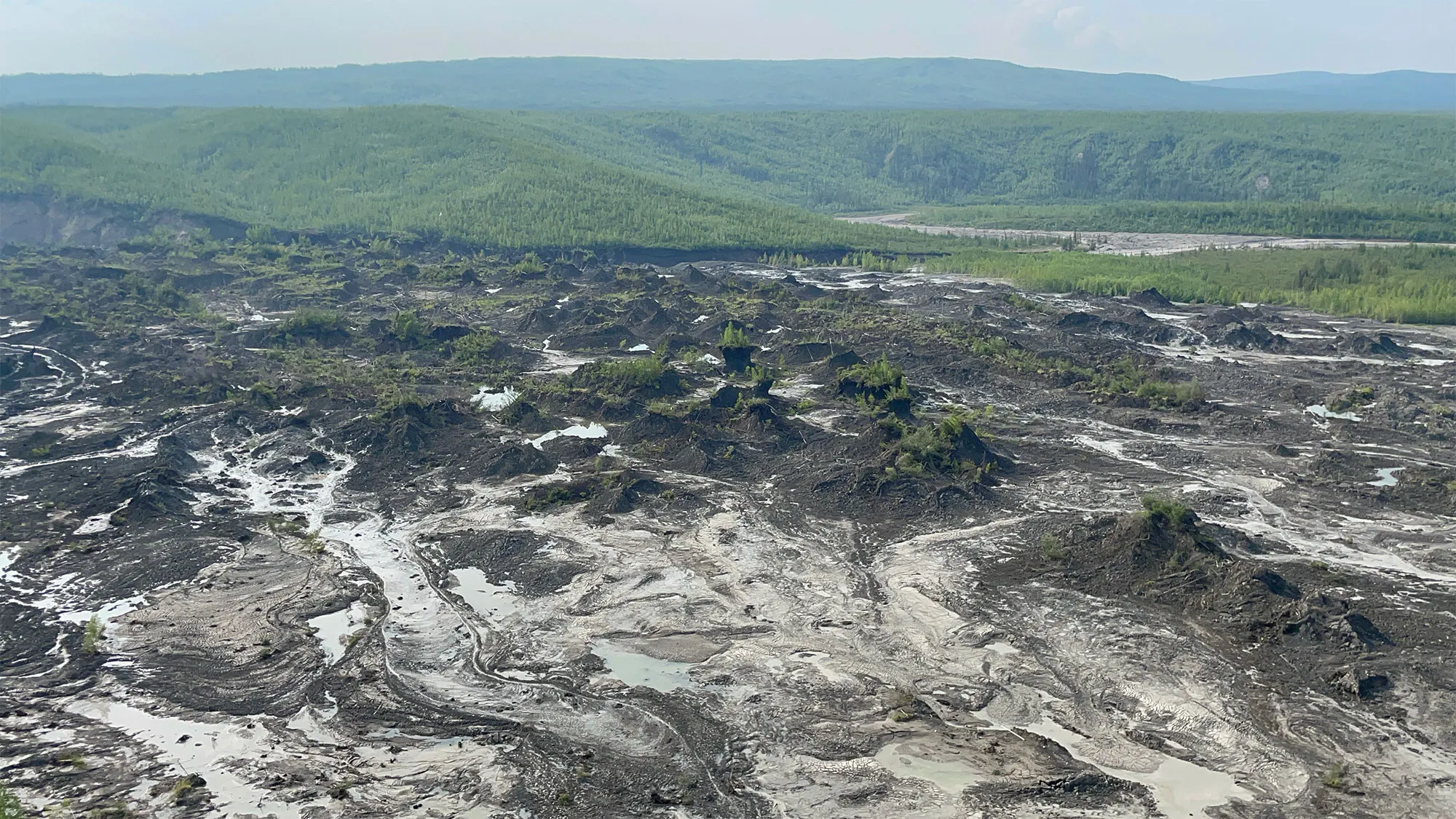
The physical evidence gathered at the sites of the Johnson and Redstone River slides confirms that the failure occurred from the bottom up. Researchers discovered massive, embedded blocks of frozen material, some reaching lengths of up to 650 feet. Had the failure been the result of a standard surface-level thaw, the landscape would have been dominated by mud and debris. Instead, the presence of these massive, intact frozen blocks indicates a structural failure of the underlying permafrost table.
Vladimir E. Romanovsky, a permafrost geophysicist and professor emeritus at the University of Alaska Fairbanks, draws a parallel between these events and the behavior of surging glaciers. The detachment process creates its own release of kinetic energy through friction and internal fracturing. Once the initial collapse occurs, the instability is far from over. The exposure of deep, vertical permafrost walls to the sun creates a "runaway" effect, where these newly exposed faces continue to thaw and fail, creating a cycle of persistent, long-term degradation.
The Global Context: A Planet-Sized Wild Card
Permafrost acts as a critical, yet fragile, component of the Earth’s climate system. Defined as ground that remains at or below 0°C (32°F) for at least two consecutive years, it serves as a massive repository for carbon, containing vast amounts of sequestered organic matter, ancient plant life, and ice. The total extent of permafrost across the Northern Hemisphere is estimated to cover an area two and a half times the size of the continental United States.
The Arctic is currently warming at a rate four times faster than the global average, a phenomenon known as Arctic amplification. This accelerated heating is driving the widespread emergence of thermokarst—a process of uneven ground settlement and the creation of sinkholes as the ice within the soil melts. Permafrost detachment slides are now considered a severe, large-scale evolution of this thermokarst process.
David Olefeldt, a soil scientist at the University of Alberta who studies permafrost, notes the significance of these findings. "This is a type of land collapse due to permafrost thaw which hasn’t really been observed before," Olefeldt said. The fact that the scientific community is only now characterizing these events suggests that the Arctic landscape is undergoing changes that are outpacing current monitoring capabilities.
Feedback Loops and the Threat of Greenhouse Gas Emissions
The implications of these slides extend well beyond the immediate disruption of local geography. As permafrost thaws, it reintroduces ancient organic material to the active biosphere. Microbes in the soil begin to consume this material, a metabolic process that releases significant quantities of methane and carbon dioxide into the atmosphere.
This creates a self-reinforcing feedback loop: the release of these greenhouse gases accelerates global warming, which in turn leads to further permafrost thaw, causing more structural failures and the release of even more carbon. Miriam Jones, a research geologist at the United States Geological Survey, emphasizes that this feedback is a major global concern. "It’s a feedback that many of us have been studying," she noted, highlighting the potential for these sudden collapses to contribute disproportionately to the total carbon budget.
Adding to the complexity is the phenomenon of "Arctic greening." As temperatures rise, shrubbery and trees are expanding northward at a rate of several miles per decade. While this might seem like a minor ecological shift, it has profound consequences for the permafrost. These plants trap snow during the winter, which acts as an insulator, preventing the extreme winter cold from reaching the ground and cooling the permafrost. This effectively keeps the ground warmer during the winter months, further accelerating the thaw.
Furthermore, the increased vegetation provides more fuel for wildfires. These fires are increasingly characterized by "zombie" behavior—the ability to smolder in the carbon-rich peat underground throughout the winter, resurfacing during the spring thaw to ignite new fires.
Future Projections and Scientific Uncertainty
Despite the clarity of the observations at the Johnson and Redstone rivers, the broader impact of permafrost detachment slides remains a significant "known unknown." Researchers are currently unable to quantify the exact volume of greenhouse gases released by these events, as they have not yet been systematically mapped or classified on a global scale.
"The short answer is: We don’t know how much, because we haven’t characterized and classified it," Young stated. However, he cautioned that given the sheer scale of these features, the cumulative emissions could be substantial.
As the climate continues to deviate from historical norms, the scientific consensus suggests that these detachment slides are not isolated anomalies but rather early indicators of a broader systemic shift. The discovery of these events serves as a stark reminder that the Arctic is not a static environment. Instead, it is reaching critical thresholds where the physical structure of the land itself is beginning to fail. As researchers continue to monitor these regions, the primary goal remains to understand the rate at which these surprises will manifest and whether humanity can accurately model the long-term, atmospheric consequences of a landscape in the midst of a violent, structural transition.