Michigan Governor Gretchen Whitmer Halts Permits for Enbridge Line 5 Tunnel Project Amid Heightened Environmental Scrutiny

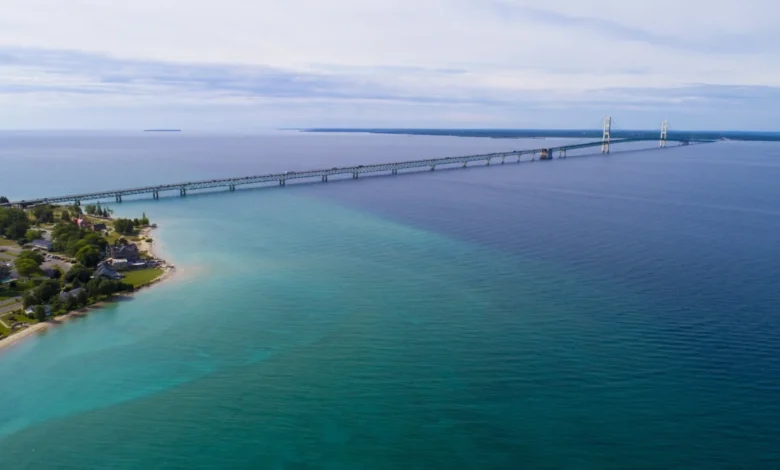
In a significant regulatory shift that could alter the future of one of North America’s most controversial pieces of energy infrastructure, Michigan Governor Gretchen Whitmer announced on Tuesday that the state is pausing both pending and previously issued permits for the proposed tunnel project beneath the Straits of Mackinac. This development marks a major escalation in the state’s oversight of Enbridge Energy’s Line 5, a 645-mile pipeline that has served as a flashpoint for environmental, economic, and tribal rights debates for over a decade.
The directive, issued to the Michigan Department of Environment, Great Lakes and Energy (EGLE), mandates a comprehensive re-evaluation of the project’s potential environmental risks. Governor Whitmer, whose second and final term concludes on January 1, emphasized that the decision stems from a critical need to address legal vulnerabilities highlighted by recent judicial rulings. "I have always said my ultimate goal is to get Line 5 out of the water," Whitmer stated. "Just one spill threatens irreparable damage to our water, our economy, and our way of life."
The Legal Catalyst: A Narrow Review
The decision to freeze permits is directly linked to a pivotal ruling by the Michigan Supreme Court earlier this summer. In that case, the court invalidated a permit previously granted for the tunnel project, arguing that the state agency’s initial review of environmental impacts was "too narrow." The justices underscored that state regulators must account for the broader, cumulative impacts of the pipeline, including the potential for a catastrophic leak in the Straits—the narrow, high-current waterway connecting Lake Michigan and Lake Huron.
By pausing the current permitting process, the Whitmer administration is effectively attempting to insulate the state from further litigation while ensuring that the review process meets the rigorous standards set by the high court. This pause affects not only new applications but also the renewal of existing permits, including one originally granted in 2021 that would have allowed construction efforts to move forward.
A Decade of Controversy: Chronology of Line 5
The Line 5 pipeline has been in operation since 1954, transporting approximately 23 million gallons of oil and natural gas liquids daily between Ontario, Canada, and Superior, Wisconsin. The pipeline’s passage through the Straits of Mackinac has long been viewed as a ticking time bomb by environmentalists and local residents.
- 1954: Line 5 begins operations.
- 2010: A massive oil spill on the Kalamazoo River, also involving an Enbridge pipeline, heightens public awareness of aging pipeline infrastructure in Michigan.
- 2017: The state begins serious negotiations with Enbridge regarding the future of the Straits segment, leading to the proposal of a protective tunnel.
- 2018: Governor Rick Snyder signs legislation creating the Mackinac Straits Corridor Authority to oversee the tunnel project.
- 2020: Governor Whitmer issues an executive order to revoke the 1953 easement that allowed the pipeline to operate in the Straits, citing violations of public trust.
- 2023: Federal regulators grant initial approvals for the tunnel, setting the stage for a conflict between state and federal oversight.
- 2024: The Michigan Supreme Court strikes down a key permit, leading to this week’s comprehensive pause on all related state-level authorizations.
The Great Lakes as a Sensitive Ecosystem
The Straits of Mackinac are not merely a transit point for energy; they represent a critical ecological corridor. The region contains sensitive wetlands and coastal habitats that are home to numerous protected species. Furthermore, the area holds immense cultural and spiritual significance for the Anishinaabe peoples, who have inhabited the Great Lakes region for millennia. For these tribes, the Straits are central to their creation stories and contain ancestral burial grounds that would be irreparably damaged by an oil release.
All 12 federally recognized tribes in Michigan have taken a unified stance against the continued operation of the pipeline, arguing that it violates treaty rights and poses an existential threat to the water, which they view as a living relative.
Enbridge’s Position: Reliability and Compliance
Enbridge Energy maintains that the current pipeline remains safe and that the proposed tunnel is the best solution for long-term safety. In a statement released shortly after the Governor’s announcement, company spokesperson Ryan Duffy defended the project. "Line 5 delivers the energy people depend on every day," Duffy said. "At Enbridge, we remain committed to that purpose and equally committed to safeguarding the Great Lakes."
Enbridge argues that the tunnel will encase the pipeline in concrete deep beneath the lakebed, effectively eliminating the risk of an anchor strike or a spill into the open water. The company has pointed to its record of securing state and federal permits as evidence of the project’s technical viability. However, recent events have complicated this narrative. Just weeks before the Michigan permit freeze, a significant leak of approximately 1.3 million gallons of natural gas liquids occurred on a section of Line 5 in Wisconsin, forcing the company to temporarily halt operations. That incident provided fresh ammunition to critics who argue that the pipeline’s entire system is aging and prone to failure.
Economic and Political Implications
The implications of this permit freeze are vast. For Michigan’s economy, the debate is framed by a tension between energy security and environmental preservation. Supporters of the pipeline, including labor unions and some manufacturing sectors, argue that Line 5 is essential for providing affordable fuel to the Midwest and that a shutdown would lead to significant price spikes and supply shortages.
Conversely, environmental advocates argue that the transition to renewable energy makes the continued reliance on 70-year-old fossil fuel infrastructure an unnecessary risk. Ashley Rudzinski, climate and environment program director for the Groundwork Center for Resilient Communities, praised the move as a major victory. "We’re seeing the Whitmer administration, finally, putting some real strength behind the words that she had already spoken," Rudzinski noted.
The move also places the issue squarely on the desk of Governor-elect Jocelyn Benson. As the administration prepares for a transition, legal teams representing various indigenous nations are already looking ahead. Laura Berglan, a senior attorney with Earthjustice—which represents the Bay Mills Indian Community, the Sault Ste. Marie Tribe of Chippewa Indians, and the Little Traverse Bay Bands of Odawa Indians—stated that the momentum must continue. "No matter who the governor is, it’s in all of our interests to keep the Great Lakes free of oil and to transition away from Line 5," Berglan said. "We need to protect our shared resources and our tribal resources for the future."
Analysis: What Comes Next?
The pause on permits creates a period of regulatory limbo. While federal approval for the tunnel project exists, the lack of state-level permits creates a legal barrier that could stop construction in its tracks. Legal analysts suggest that the state will likely use this time to conduct a more robust "alternatives analysis," examining not just the tunnel project, but whether the pipeline is necessary at all, given current energy demands and the availability of alternatives.
The situation also highlights the ongoing tension between state and federal authority. While Enbridge has secured some federal backing, the Michigan Supreme Court’s insistence on a deeper review of environmental impact suggests that the state courts will continue to serve as a significant check on the project.
For now, the project remains at a standstill. Whether the state’s move represents a final death knell for the tunnel project or merely a temporary delay to satisfy procedural requirements remains to be seen. What is clear is that the battle over Line 5 has entered a new, more legally complex phase, with the health of the Great Lakes and the future of regional energy policy hanging in the balance. As 2025 approaches, all eyes will be on how the state’s environmental regulators interpret their mandate and whether the incoming administration will maintain the hardline stance adopted by Governor Whitmer.