Tag Israeli Palestinian Conflict
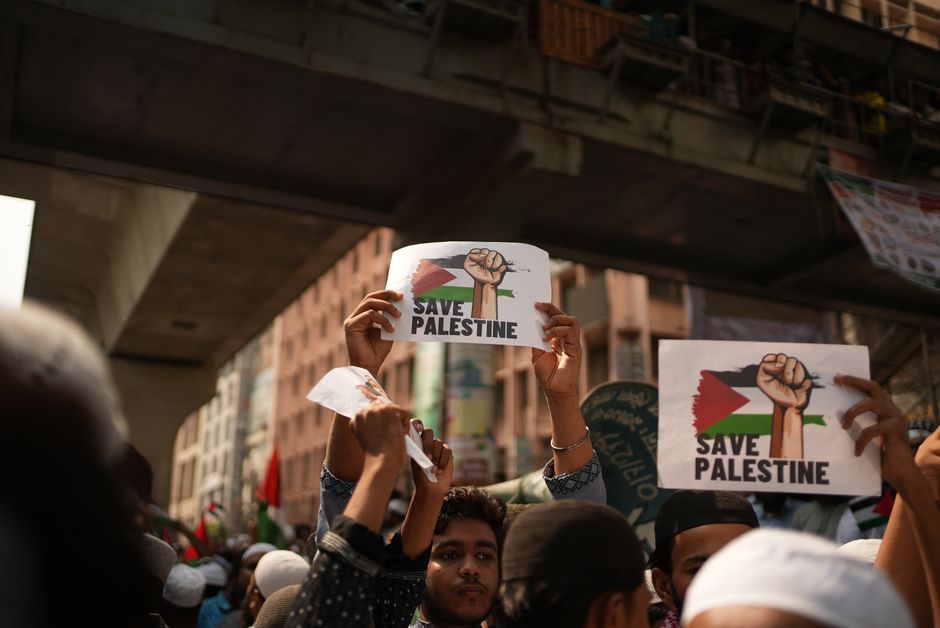
The Israeli-Palestinian Conflict: A Deep Dive into History, Drivers, and the Path Forward
The Israeli-Palestinian conflict is a complex and deeply entrenched geopolitical dispute centered on land, identity, and historical claims between Israelis and Palestinians. At its core lies the struggle for sovereignty and self-determination over the same territory, a region rich in religious, historical, and cultural significance for both peoples. This conflict, with its roots stretching back over a century, has witnessed numerous wars, intifadas (uprisings), peace negotiations, and ongoing cycles of violence, displacement, and human rights concerns. Understanding its intricacies requires examining its historical genesis, the key territorial disputes, the roles of international actors, and the persistent obstacles to achieving a lasting peace.
The modern phase of the conflict can be traced to the late 19th and early 20th centuries, fueled by the rise of Zionism, a nationalist movement advocating for the establishment of a Jewish homeland in Palestine, then part of the Ottoman Empire and later a British Mandate. Concurrently, Arab nationalism also surged in the region, with Palestinian Arabs viewing the land as their ancestral home and resisting Zionist aspirations. The Balfour Declaration of 1917, issued by the British government, expressed support for "the establishment in Palestine of a national home for the Jewish people," a statement that would have profound and enduring consequences. Following World War I and the collapse of the Ottoman Empire, the League of Nations granted Britain a mandate over Palestine, entrusting them with the administration of the territory and the implementation of the Balfour Declaration. During the British Mandate period (1920-1948), Jewish immigration increased significantly, leading to growing tensions and sporadic outbreaks of violence between Jewish and Arab communities.
The post-World War II era marked a critical turning point. The Holocaust intensified international pressure for a Jewish state, and in 1947, the United Nations proposed a partition plan for Palestine, dividing the territory into separate Arab and Jewish states, with Jerusalem to be administered internationally. While the Zionist leadership accepted the plan, it was rejected by the Arab leadership and neighboring Arab states. In 1948, Britain withdrew its forces, and Israel declared its independence. This was immediately followed by the first Arab-Israeli War, in which Israel fought against a coalition of Arab armies. Israel emerged victorious, expanding its territory beyond the UN partition plan and displacing hundreds of thousands of Palestinians, an event known as the Nakba (Arabic for "catastrophe"). The war resulted in the establishment of the State of Israel and the displacement of a significant portion of the Palestinian population, many of whom became refugees in neighboring Arab countries and in the West Bank and Gaza Strip, territories then under Jordanian and Egyptian control, respectively.
The territorial dispute remains the central and most intractable issue. At the heart of the conflict are the territories occupied by Israel in the 1967 Six-Day War: the West Bank, the Gaza Strip, East Jerusalem, and the Golan Heights (which Israel considers part of its territory). Palestinians aspire to establish an independent state in the West Bank and Gaza Strip, with East Jerusalem as its capital. Israel, however, maintains control over these areas, citing security concerns and historical ties. The presence of Israeli settlements in the West Bank, deemed illegal under international law by the vast majority of the international community, further complicates the territorial issue. These settlements have expanded over decades, fragmenting Palestinian land, hindering contiguity, and creating a de facto annexation of significant portions of the West Bank. The status of Jerusalem is another highly contentious point. Israel considers Jerusalem its undivided capital, while Palestinians claim East Jerusalem as the capital of their future state. The city, sacred to Judaism, Christianity, and Islam, is home to holy sites for all three religions, making its division or shared governance a deeply sensitive issue.
The Gaza Strip presents a unique and particularly dire humanitarian situation. Following Israel’s withdrawal of settlers and troops in 2005, Hamas, a militant Islamist organization, gained control of the territory. Israel and Egypt have since imposed a blockade on Gaza, citing security concerns related to Hamas rocket attacks and the smuggling of weapons. This blockade has severely restricted the movement of people and goods, leading to widespread poverty, high unemployment, and a collapsed infrastructure. Recurring conflicts between Israel and Hamas have resulted in significant loss of life and further destruction in Gaza. The blockade’s impact on the civilian population is a major humanitarian concern and a focal point of international criticism.
Another significant dimension of the conflict is the Palestinian refugee issue. Millions of Palestinians and their descendants, displaced during the 1948 and 1967 wars, live in refugee camps in Lebanon, Syria, Jordan, and within the West Bank and Gaza. Palestinians assert their right of return to their ancestral homes in what is now Israel, a demand that Israel vehemently opposes, viewing it as an existential threat to its Jewish majority. This demand for a right of return, enshrined in UN resolutions, remains a major obstacle to any comprehensive peace agreement.
The role of international actors has been pivotal throughout the conflict. The United States has historically been a key mediator and a staunch ally of Israel, providing significant military and financial aid. Arab nations have generally supported the Palestinian cause, although their engagement has varied over time, with some normalizing relations with Israel. European Union countries have often advocated for a two-state solution and have provided substantial humanitarian and development aid to the Palestinians. The United Nations has passed numerous resolutions pertaining to the conflict, including those affirming Palestinian self-determination and condemning Israeli settlements. However, the UN’s ability to enforce these resolutions has been limited, often due to the veto power held by permanent members of the Security Council.
Peace negotiations have been a recurring, yet often failed, feature of the conflict. Several rounds of talks have taken place, most notably the Oslo Accords in the 1990s, which envisioned a phased approach to Palestinian self-governance and eventually statehood. However, the Oslo process ultimately collapsed due to continued violence, the expansion of settlements, and a lack of trust between the parties. Subsequent negotiations, including those under U.S. auspices, have also failed to yield a lasting resolution. The core issues of borders, Jerusalem, refugees, security, and mutual recognition have consistently proven to be stumbling blocks.
The drivers of the conflict are multifaceted and deeply ingrained. Nationalism, religious claims, historical grievances, security concerns, and economic disparities all play a significant role. For Israelis, the conflict is often framed as a struggle for survival and security in a hostile region, a nation built on the ashes of persecution and seeking to defend itself against those who reject its right to exist. For Palestinians, it is a struggle for liberation from occupation, for self-determination, and for the redress of historical injustices, including displacement and the denial of basic human rights. The perception of injustice and victimhood on both sides fuels the cycle of violence and mistrust, making reconciliation exceedingly difficult.
The ongoing occupation of Palestinian territories, characterized by checkpoints, movement restrictions, military incursibility, and the expropriation of land, has a profound and detrimental impact on Palestinian lives and society. This occupation is a central grievance for Palestinians and a constant source of tension and violence. The militarization of both sides, the presence of armed groups, and the use of force by both Israeli security forces and Palestinian militant factions contribute to the perpetuation of the conflict and the tragic loss of civilian lives.
Looking towards a path forward, potential solutions often revolve around the concept of a two-state solution, envisaging an independent Palestinian state coexisting peacefully alongside Israel. This solution, widely supported internationally, would require Israel to withdraw from most of the territories occupied in 1967, with mutually agreed land swaps. East Jerusalem would likely need to be shared or divided as a capital for both states, and a mechanism for addressing the refugee issue would need to be established. However, the practical implementation of a two-state solution faces immense challenges, including the continued expansion of settlements, the deep divisions within Palestinian leadership, and the political will, or lack thereof, on both sides to make the necessary compromises.
Alternative frameworks, such as a one-state solution, which would involve a single democratic state encompassing both Israelis and Palestinians with equal rights, have also been discussed. However, this approach raises profound questions about national identity, governance, and the potential for continued intercommunal strife. Another possibility is a confederation, allowing for separate states with a degree of shared governance and open borders. Each proposed solution carries its own set of complexities and potential pitfalls.
Ultimately, achieving lasting peace in the Israeli-Palestinian conflict requires a fundamental shift in approach, moving beyond zero-sum thinking and toward a recognition of the legitimate aspirations and security needs of both peoples. This would likely involve sustained and determined international diplomacy, robust security guarantees for both sides, economic development initiatives, and a commitment to justice and reconciliation. Addressing the root causes of the conflict, including the occupation, the denial of Palestinian rights, and Israeli security concerns, is paramount. The human cost of this protracted conflict, measured in lost lives, shattered communities, and enduring trauma, underscores the urgent need for a just and sustainable resolution that allows both Israelis and Palestinians to live in dignity and security. The road to peace is arduous and fraught with peril, but the alternative – continued conflict and suffering – is simply unsustainable.