Beyond the Boston Common: A Comprehensive Guide to the Historical and Cultural Renaissance of Lexington and Concord.


The outer-Boston suburbs of Lexington and Concord, long celebrated as the dual cradles of American independence and the intellectual birthplace of American literature, are currently undergoing a significant cultural and hospitality-driven renaissance. Located approximately 30 minutes northwest of the Massachusetts state capital, these municipalities offer a distinct transition from the dense urban fabric of Boston to a landscape that remains remarkably rural in character. As the United States approaches its semiquincentennial—the 250th anniversary of the signing of the Declaration of Independence—Lexington and Concord are positioning themselves as more than mere historical sites. They are evolving into a premier destination for "modern New England living," blending preserved 18th-century heritage with high-end culinary innovation, luxury hospitality, and sophisticated contemporary arts.
The Gateway to the American Revolution: Historical Foundations
The historical weight of Lexington and Concord is anchored in the events of April 19, 1775. It was here that the "shot heard ’round the world" was fired, marking the official commencement of the American Revolutionary War. The geography of the region serves as a physical timeline of the conflict. In Lexington, the Battle Green remains a focal point where the first skirmish between the colonial militia and British regulars occurred. Following this initial engagement, the conflict moved to Concord’s Old North Bridge, now part of the Minute Man National Historical Park.

The Minute Man National Historical Park encompasses over 900 acres across the towns of Lexington, Lincoln, and Concord. It preserves the "Battle Road," the route taken by British troops during their retreat to Boston. To enrich the visitor experience, the National Park Service (NPS) maintains a year-round schedule of educational programming. These efforts are currently being scaled up as part of the broader "America 250" initiative. Between 2024 and July 2026, the region will host a series of commemorative events, including large-scale battle reenactments, historical symposia, and new interpretive exhibits designed to provide a more inclusive view of the Revolution, accounting for the roles of women, enslaved individuals, and Indigenous populations during the conflict.
Strategic Accessibility: Connecting the Urban Core to the Rural Frontier
One of the primary drivers of the region’s current popularity is its multifaceted accessibility. Despite their "still-rural" aesthetic, Lexington and Concord are integrated into the Greater Boston infrastructure through three primary modes of transport.
For many visitors, the Minuteman Bikeway serves as a scenic and active corridor. This 10-mile multi-use trail, built on a former rail bed, connects the Alewife station in Cambridge—the terminus of the MBTA Red Line—directly to the center of Lexington and Bedford. The trail is frequently cited by urban planners as one of the most successful "rail-to-trail" projects in the United States, facilitating both recreational tourism and sustainable commuting.

Alternatively, the Fitchburg Line of the MBTA Commuter Rail provides direct service from Boston’s North Station to the heart of Concord and West Concord. This rail link has been instrumental in the development of West Concord as a walkable "village" destination, allowing visitors to access high-end dining and independent retail without the need for a private vehicle. For those traveling by car, the region is easily accessible via Route 2 and I-95, though local authorities frequently emphasize that the preservation of narrow, winding colonial-era roads is a priority to maintain the area’s historic integrity.
The Road to 2026: The America 250 Celebrations and Regional Impact
The upcoming 250th anniversary of the United States has catalyzed significant public and private investment in the Lexington-Concord corridor. The Massachusetts Commission on the 250th Anniversary of the American Revolution has identified these towns as "Tier 1" sites for national commemoration.
Data from the Greater Boston Convention & Visitors Bureau suggests that historical tourism in the region is expected to increase by 25-30% over the next two years. In response, local historical societies have initiated "Project 250," a collaborative effort to digitize archives and restore historic structures. This includes the preservation of the Hancock-Clarke House and the Buckman Tavern in Lexington, both of which played pivotal roles on the night of Paul Revere’s ride. The influx of funding is not merely for maintenance; it is aimed at rebranding the region. Local tourism officials have stated that the goal is to move away from the "educational slog" associated with school field trips and toward a sophisticated "heritage tourism" model that appeals to international travelers and luxury seekers.

A Literary Nexus: From the Alcotts to the Transcendentalists
While the military history of the 18th century defines the landscape, the 19th-century literary movement defines the region’s soul. Concord, in particular, was the epicenter of American Transcendentalism.
Orchard House, the former home of Louisa May Alcott, remains one of the most visited literary sites in the world. It was here that Alcott wrote Little Women in 1868. The property saw a significant spike in interest following Greta Gerwig’s 2019 film adaptation, which utilized the site for filming and historical reference. Preservationists have maintained the house with approximately 80% of its original furnishings, including the desk built for Louisa by her father, Amos Bronson Alcott.
A short distance away lies Walden Pond State Reservation, the site of Henry David Thoreau’s two-year experiment in simple living. In recent years, the Commonwealth of Massachusetts has invested over $7 million in the Walden Pond Visitor Center and bathhouse facilities to manage the high volume of visitors while protecting the pond’s delicate ecology. The site continues to serve as a pilgrimage point for environmentalists and philosophers.

The literary tour of Concord typically concludes at the "Authors’ Ridge" in Sleepy Hollow Cemetery. This site serves as the final resting place for Ralph Waldo Emerson, Henry David Thoreau, Nathaniel Hawthorne, and the Alcott family. The concentration of these figures in a single location provides a unique opportunity for factual analysis of the interconnected nature of the 19th-century American intellectual community.
Contemporary Culture: Blending Outdoor Recreation with Fine Arts
Beyond history and literature, the region has established itself as a hub for contemporary arts and environmental stewardship. The deCordova Sculpture Park and Museum in Lincoln represents a significant cultural asset. Spanning 30 acres, it is the largest park of its kind in New England. The park features a rotating collection of over 60 large-scale outdoor sculptures, providing a modern counterpoint to the surrounding colonial architecture.
The integration of art and nature is a recurring theme in the region. The Hapgood-Wright Town Forest in Concord offers several miles of trails that are less crowded than Walden Pond, providing the "quietude" that Thoreau famously sought. These areas are managed through rigorous local conservation bylaws, ensuring that the "tony bedroom community" does not succumb to suburban sprawl.

The Evolution of Suburban Hospitality: Luxury Lodging and Local Heritage
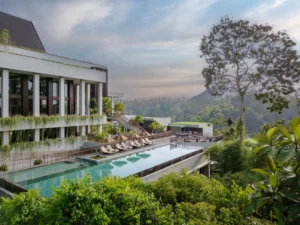
The hospitality sector in Lexington and Concord has shifted toward the boutique and the ultra-luxury. The standout property in this category is the Inn at Hastings Park in Lexington. As the only Relais & Châteaux property in the immediate Boston area, the inn represents a high-water mark for suburban hospitality.
Owned and operated by Trisha Pérez Kennealy, the inn comprises three historic buildings, including a main house that dates back to 1888. The 22 rooms are designed to reflect a "modern Americana" aesthetic, utilizing local artisans and New England-inspired decor. Analysts point to the success of the Inn at Hastings Park as evidence of a broader trend: the "de-urbanization" of luxury travel. High-net-worth travelers are increasingly seeking out high-end accommodations in historical settings that offer a slower pace than the Boston Seaport or Back Bay, while still maintaining proximity to urban amenities.
Gastronomic Innovation: The Rise of the Farm-to-Table Corridor
The culinary scene in Lexington and Concord has evolved from simple tavern fare to sophisticated, farm-driven dining. This transition is rooted in the region’s agricultural heritage; many of the area’s top chefs source ingredients from local family farms that have been in operation for generations.

- Saltbox Kitchen (Concord): Led by Chef Ben Elliott, this establishment epitomizes the farm-to-table movement. The restaurant sources the majority of its produce, honey, and hops from Elliott’s own Saltbox Farm. This vertical integration allows for a menu that changes weekly based on harvest cycles.
- Woods Hill Table (West Concord): This restaurant is a sister property to the renowned Woods Hill Pier 4 in Boston. The Concord location focuses on organic, pasture-raised meats and sustainable seafood. The presence of such a high-caliber "sister property" in a suburb indicates the economic strength and sophisticated palate of the local population.
- 80 Thoreau (Concord): Located in the Concord Depot, this restaurant offers a "refined New England" menu. It has gained national recognition for its ability to blend fine dining techniques with local ingredients like Concord grapes and regional seafood.
- Bedford Farms Ice Cream: For a more traditional experience, this stand has been in operation since 1880, serving as a cultural touchstone for the local community and a reminder of the region’s dairy farming roots.
Broader Implications: Preserving the Past in a Modern Bedroom Community
The success of Lexington and Concord as a modern destination provides a case study in "heritage management." By balancing the preservation of 250-year-old structures with the demands of a high-income, modern population, these towns have avoided becoming "museum pieces."
However, this success brings challenges. The high cost of living and the strict zoning laws required to preserve historical integrity have made the area one of the most expensive real estate markets in Massachusetts. Furthermore, the anticipated surge in tourism for the 2026 anniversary will test the region’s infrastructure. Local officials are currently debating strategies for "managed growth," ensuring that the influx of visitors does not degrade the very sense of "rural peace" that makes the area attractive.
In conclusion, Lexington and Concord represent a unique intersection of American identity. As the nation prepares to celebrate its 250th year, these towns stand as living monuments to the revolutionary spirit and the literary genius of the past, while simultaneously thriving as centers of modern luxury and culinary excellence. For the traveler, they offer a rare opportunity to engage with history not as a static lesson, but as a vibrant, ongoing narrative.